Archive

November 2026

Browsing

The Pittsburgh Steelers continued their historic struggle in Philadelphia this past Sunday, falling 19-16 to the Eagles and extending a losing streak in the city that dates back to 1965. It was a flat performance for a team that recently sat atop the AFC North but has now dropped two straight games. For much of the afternoon, the offense looked completely disconnected, failing to find any rhythm until the outcome was essentially decided. While the defense fought bravely, the lack of cohesion on the other side of the ball left them shorthanded when it mattered most.

Despite the disappointing result, there was a bright spot in the form of undrafted rookie Max Hurleman. In his first career NFL appearance, Hurleman stepped up as a reliable target, leading the team with six catches for 61 yards and hauling in a twenty yard touchdown thanks to some impressive adjustments in the end zone. Along with taking over return duties from Kaden Wetjen, Hurleman showed enough poise to suggest he will be a permanent fixture in the lineup moving forward. Veteran kicker Chris Boswell also earned praise for keeping Pittsburgh within striking distance, accounting for almost all of the scoring with three successful field goals from varying distances.

However, these individual successes were overshadowed by significant lapses in discipline and execution. Star receiver DK Metcalf had an emotional meltdown that ended in an ejection after receiving two personal fouls, including one for poking an opponent in the eye. With Metcalf gone and struggling emotionally lately, many are questioning if his volatility is hindering an offense that might actually benefit from more stable options like Hurleman or returning rookie Roman Wilson. On the defensive side, Alex Highsmith provided an early spark with two sacks before a concerning ankle injury forced him into a lengthy stay in the medical tent and eventually sidelined him for the rest of the day.

The most alarming trend remains a crumbling ground game and porous pass protection. A rushing attack that began the season as one of league leaders struggled immensely against a mediocre Philadelphia front seven, with Jaylen Warren and Rico Dowdle both held to meager averages. This inefficiency can be traced directly back to an offensive line missing key pieces; without Mason McCormick, Aaron Rodgers was under constant duress and sacked five times. As questions mount regarding Spencer Anderson’s role on that line, Pittsburgh must find answers quickly if they hope to reclaim their division lead and stop this downward slide.

Wall Street is attempting to find its footing as U.S. equity futures climbed on Sunday evening, offering a glimmer of hope following a devastating week for investors. All three major averages entered correction territory by Friday’s close, marking some of the steepest declines seen in years. The carnage was particularly acute for the Nasdaq Composite and the Dow, both of which suffered their worst weekly drops in over six years, leaving the Nasdaq in negative territory for the calendar year.

While American traders look toward a bounce back, global markets remain cautious. In Asia, indices opened lower on Monday, with Australia’s S&P/ASX 200 continuing a losing streak and Hong Kong’s Hang Seng Index futures signaling further declines. This lingering pessimism stems largely from a sudden souring of investor appetite for artificial intelligence stocks, creating a volatile environment where even strong debuts failed to stem the tide of selling.

Analysts are now debating whether the market has finally hit a durable bottom or if there is more pain to come. Drew Pettit, chief investment strategist at Roundhill, suggested that the broad nature of last week’s selling might actually indicate the rout is ending. However, he noted that the burden of proof now lies with the bulls to demonstrate that corporate earnings stories haven’t been fundamentally broken by the recent volatility.

Attention will shift heavily toward upcoming earnings reports from hardware giants Hewlett Packard Enterprise and Dell Technologies early this week. Both companies have been hammered recently due to their ties to AI infrastructure, making their financial disclosures critical benchmarks for the sector’s health. Traders will be navigating these moves during a truncated schedule, as markets prepare for an early exit ahead of the Thanksgiving holiday on Thursday.

Anthropic’s Thursday stock market debut, valued at around $1.5 trillion, is the largest in American history and, given promises made by its founders, is likely the preface to a similarly historic flood of cash into the political system.

Bloomberg projects that each of Anthropic’s seven co-founders will be worth approximately $24.5 billion now that their artificial intelligence firm has gone public. Each of the seven has also pledged to give away 80% of their equity in the firm to philanthropic causes — a promise that has raised eyebrows given Anthropic’s links to a controversial moral philosophy and its history of spending big to influence elections.

Effective altruism, which some of Anthropic’s early funders and employees have voiced support for, generally treats massive political and philanthropic giving as a moral obligation to prevent AI “doomsday” scenarios, such as a rogue agent working to exterminate the human race. Though the company’s founders have distanced themselves from the movement, some early employees and other figures associated with Anthropic have maintained connections to its ideas, particularly its emphasis on preventing potentially catastrophic risks from artificial intelligence.

Politically, this has manifested as Anthropic’s leaders throwing large sums of money behind efforts to regulate AI development. This approach has often put Anthropic at odds with the White House and its Republican allies, who are pursuing unchained innovation to spur economic growth, a dynamic that could become even more tense now that the firm’s leaders have billions of dollars at their disposal.

ANTHROPIC CEO CALLS ON AI INDUSTRY TO SLOW DOWN TECH RACE, DRAWING SUPPORT FROM ELON MUSK, SAM ALTMAN

A Fox News Digital analysis of campaign finance filings found that Anthropic employees donated about $7.1 million to Democrats and Democratic-aligned committees, compared to just around $3.7 million to Republicans and Republican-aligned committees during the 2026 electoral cycle.

Such a split is noteworthy given that Anthropic offers to match shares donated by its employees by contributing additional shares to the organizations they opt to support. If the firm’s employees decide to give large chunks of equity to left-of-center organizations, for instance, it would result in a significant Anthropic-funded financial windfall for the left.

“I think there’s a lot of overlap between certain left-of-center causes,” Nathan Leamer, a consultant who works on tech policy, told Fox News Digital when asked about the political orientation of Anthropic’s employees and effective altruists more broadly. “They’ve benefited from capitalism, but their worldviews do not always reflect free market values.”

TECH POWERHOUSE’S REGULATORY PUSH BEARS SIMILARITIES TO A NOTORIOUS WASHINGTON STRATEGY

While Anthropic’s rank-and-file employees appear to favor Democrats in their political donations, some of the company’s most prominent financial contributions have gone toward a political network seeking to influence both parties around AI regulation, rather than exclusively supporting one partisan side.

Anthropic’s founders and longtime employees have comparatively little in the way of direct partisan donations, with much of their money being directed toward Public First, a super PAC network that supports candidates in both parties who favor stronger AI safeguards.

Defending Our Values PAC, on the right, and the Jobs and Democracy PAC, on the left, spent millions of dollars influencing Republican and Democratic primary elections during the 2026 cycle to boost candidates seeking to advance safety-related AI regulations. The Democratic PAC spent far more, around $20 million, than its GOP-focused counterpart, which paid out just under $8 million.

As 2028 approaches, the seven co-founders’ newly acquired fortunes could give them substantially greater financial capacity to support causes and organizations they believe in — and presidential primaries will be a natural target for their newly acquired war chests.

In the general election, whichever candidate takes a position more aligned with Anthropic’s preferred regulatory stance may be able to count on large sums to back their bid for the White House. The new funds also enable Anthropic and its allies to focus on a much broader range of down-ballot races to win more allies in Congress and state legislatures.

HOUSE COMMITTEE PASSES FOREIGN FUNDING TRANSPARENCY ACT TO EXPOSE FOREIGN DONATIONS TO NONPROFITS

Explicitly political organizations aren’t the only ones likely to see their coffers swell from the deluge of cash.

A cottage industry of think tanks and advocacy organizations has sprung up in D.C. and San Francisco to conduct research and make arguments aimed at convincing those with power of the merits of robust AI safety regulation. Many nonprofit advocacy organizations, including 501(c)(4) groups such as Public First Action, are not required to publicly disclose their donors, making it difficult to identify the full network of individuals and organizations financing the push for AI regulation. Anthropic, however, made its initial $40 million donation to Public First Action to support such education and policy work.

“I can tell you among civil society — think tanks and foundations and other organizations in the nonprofit world — this is absolutely making an impact,” Leamer told Fox News Digital when asked about this dynamic. “I was in a conversation last night with a conservative organization who was telling me they’re being offered hundreds of thousands of dollars to engage in a more [effective altruist]-aligned worldview, even though it’s not necessarily where they are philosophically … If that’s happening among people I’m talking to, I can’t imagine how many more they’re talking to.”

AI ‘DOOMERS’ RISK KNEECAPPING US VS CHINA, BUT EX-PENTAGON VET SAYS BOTH EXTREMES MISS THE MARK

An individual close to the think tank world, requesting to remain anonymous, told Fox News Digital that donors aligned with Anthropic and effective altruism are already attempting to throw money around with the aim of influencing conservative thought leaders. In their telling, prospective funders will approach right-of-center organizations and offer them funding to research topics they are already interested in, such as child safety, then use that grant funding as leverage to influence their messaging.

Much of this messaging has been oriented toward pushing regulation to slow AI development so that engineers can devise mechanisms to stop the technology from being used for evil, or from inadvertently hurting people.

Anthropic’s leaders maintain that such regulations are necessary to prevent AI from harming humanity, whereas its detractors argue that such guardrails will kneecap America’s ability to compete with China. Some critics have argued that Anthropic is pushing for safety laws as a way to create rules that it can then exploit to give itself a leg up over rivals.

WHO IS DARIO AMODEI, THE ANTHROPIC CEO PUSHING INDEPENDENT AI OVERSIGHT?

Some have traced Anthropic’s caution toward AI development to the effective altruist movement, which itself has segments who predict that unregulated advancement in the field may bring about the end of humanity.

Critics of effective altruism, which holds that individuals should seek out the avenue through which they can do the most good for each dollar spent, argue that its emphasis on speculative threats, including catastrophic artificial intelligence, can divert resources from immediate problems such as poverty.

In its extreme manifestation, some effective altruists have argued that one of the most efficient ways to engage in charitable giving is by improving the welfare of shrimp, as hundreds of billions of shrimp are farmed annually, so even modest improvements in how they are treated could reduce enormous amounts of suffering at relatively little cost. Mainstream effective altruists, however, generally argue that funds should be directed toward researching AI safety given the near-infinite negative downside of the technology destroying humanity.

That Anthropic’s leaders will actually open their pocketbooks to the extent promised, or even to these causes in particular, is not guaranteed. The IPO’s prospectus calls the commitments “voluntary, revocable expressions” of philanthropic intent that “do not constitute legally binding obligations.”

Their ability to spend will also be dependent on Anthropic’s stock holding value amid a turbulent political and economic environment.

Anthropic and Public First Action did not respond to requests for comment when reached by Fox News Digital on Thursday.


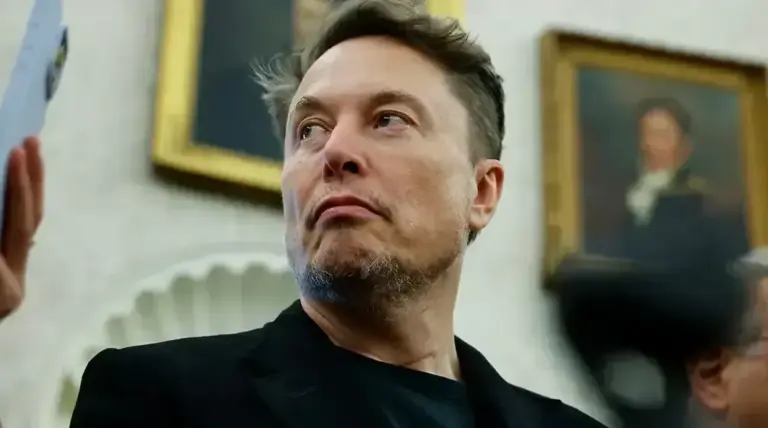
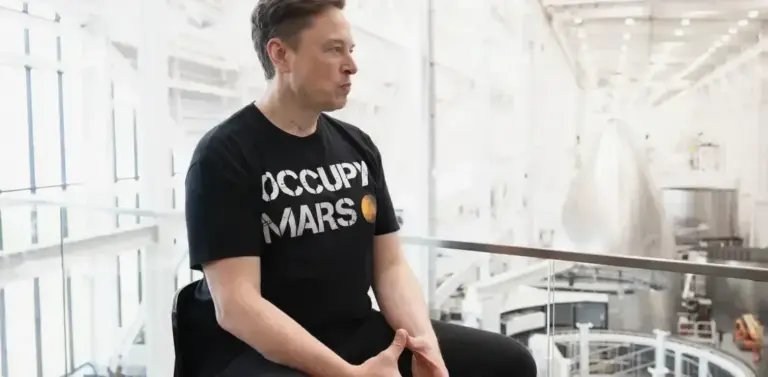
Elon Musk’s SpaceX has hired a team of veteran Washington lobbyists with Democratic connections as the party prepares to take control of Congress and intensify scrutiny of his business empire.

Democratic lawmakers have signaled plans to investigate several aspects of Musk’s business dealings and government relationships, including allegations that SpaceX improperly restricted Ukraine’s satellite communications, whether the Pentagon has become overly dependent on the company and potential conflicts of interest stemming from Musk’s relationship with the Trump administration.

Against that backdrop, newly released public records show SpaceX has retained five veteran lobbyists from Mehlman Consulting, a bipartisan D.C.-based government affairs firm, several of whom have deep ties to Democratic lawmakers and former administrations.

SpaceX, with a market capitalization of nearly $2 trillion, is home to Musk’s holdings in aerospace engineering, artificial intelligence, telecommunications and space transportation. If Democrats successfully knock it down a peg, the resulting loss in value could send shock waves throughout the economy.

DEMOCRATS SET SIGHTS ON ELON MUSK PROBE AFTER MIDTERM WINS, BUT PRITZKER DRAWS A SURPRISING LINE

Musk has worked to publicly distance himself from the right wing since the GOP’s poor midterm performance, recently stating that he’s “not MAGA” at a New York Times summit.

“I feel pretty foolish about having spent so much money and not seeing much. Or maybe it would have been much worse without that,” he said at the event. “I’m not sure what MAGA means, but if that means sort of blind adherence to a set of policies by the Republican Party, then I certainly don’t have that.”

HOW ELON MUSK GOT BACK IN TRUMP’S ORBIT AFTER NUCLEAR FALLOUT, INSIDERS REVEAL: ‘WATER UNDER THE BRIDGE’

Musk isn’t the first tech leader to throw money to Democratic operatives, seemingly to prepare for the incoming congressional majority. Palantir, another frequent target of Democratic criticism, has also retained lobbyists with ties to the party.

“I think at the end of the day, these companies have an inordinate amount of money, and they will try and put it wherever they can in order to stave off any real accountability,” Aya Ibrahim, a senior fellow at the AI Now Institute and a former Biden administration official, told NPR of Palantir’s hirings.

WHY CORPORATE AMERICA NEEDS ONE PLAYBOOK FOR A DIVIDED WASHINGTON AFTER NOVEMBER

Technology stocks took a sharp hit in the days after Democrats won their stunning midterm victory, with AI infrastructure and data-center companies among the hardest hit as investors weighed the prospect of tighter regulation.

The throng of lobbyists adds to Musk’s already large arsenal of paid influencers, which includes Republicans and Democrats at the state and federal levels.

Musk’s new agents include the former deputy chief of staff to Sen. Maria Cantwell, who is slated to take over the powerful Commerce Committee in January, a former aide to Vice President Al Gore and a host of other one-time high-ranking Democratic staffers. The effective date of registration listed on the lobbying records was Oct. 1, around the time many were predicting Democrats would win control of Congress.

SpaceX and Mehlman Consulting did not respond to requests for comment when reached by Fox News Digital on Wednesday.

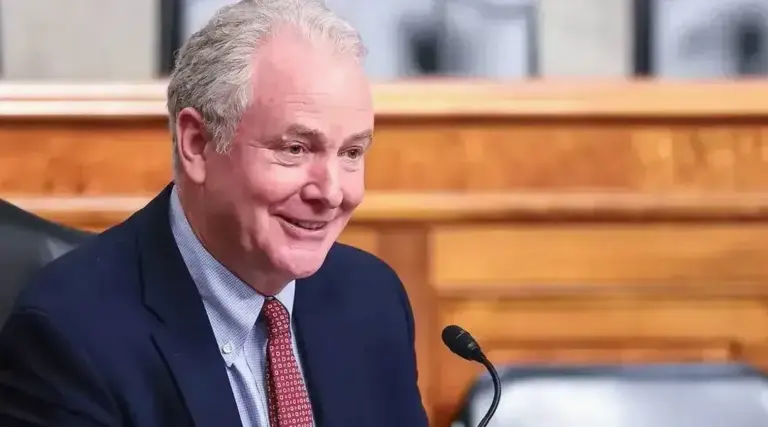
Sen. Elissa Slotkin, D-Mich., said Thursday she will back Sen. Chris Van Hollen, D-Md., as he challenges current Senate Minority Leader Chuck Schumer for the majority leader slot.

Van Hollen announced a bid for the role last week.

“I’ve been clear as well that I don’t think that Senator Schumer is best positioned to be our next leader. I’m encouraged that people like Chris Van Hollen got in the race, and because I’ve been clear that I wasn’t supporting Schumer, I will be supporting Chris Van Hollen,” Slotkin stated in a video posted to social media.

BERNIE SANDERS SAYS HE WON’T BACK SCHUMER AS PUSH FOR NEW LEADERSHIP GAINS STEAM

“But I think no matter the outcome, it’s going to be imperative for our leaders to demonstrate how they’re going to incorporate that next generation, and what big and bold ideas, specifically, they’re going to put forward in the first 100 days,” she said.

Van Hollen shared Slotkin’s post on X and wrote, “@SenatorSlotkin & I agree: the American people spoke, and we need new leadership in the United States Senate. Now is the time to act boldly, and we’re going to work together to deliver results.”

TOP DEM CRIES ‘WEAPONIZATION’ AS COMMENTS WARNING YOUNG PEOPLE NOT TO JOIN TRUMP ADMIN LAND HER IN HOT WATER

Sen.-elect Abdul El-Sayed — who will become the junior senator from Michigan early next year and is backing Van Hollen for the majority leader role — also shared Slotkin’s post.

“Michigan for @ChrisVanHollen,” El-Sayed wrote. His post included a raised fist emoji.

Sen.-elect Peggy Flanagan of Minnesota, who is also supporting Van Hollen’s leadership bid, shared Slotkin’s post and added, “Americans spoke. Democrats are listening.”

HILLARY CLINTON DISMISSES DEMOCRATIC LEADERSHIP BATTLE AS A ‘PERFORMANCE’ AS SCHUMER FACES PROGRESSIVE REVOLT

Democrats decisively defeated Republicans in the 2026 midterms and will consequently wield both the Senate and House majorities during the 120th Congress, which begins early next year.

This post appeared first on https://www.foxnews.com

Elon Musk is pivoting his empire toward artificial intelligence with a massive seventy four billion dollar investment in two supercomputing hubs located in Texas and Arizona. While the financial scale of the project is staggering, it has sparked a fierce debate over who actually foots the bill for the immense electrical and environmental costs associated with AI. In Arizona, a proposed campus in Cochise County would require six thousand megawatts of power, representing nearly two thirds of the peak demand seen by one of the state’s largest utility providers this past summer. Local officials and the state attorney general are now demanding transparency on whether taxpayers or ratepayers will end up subsidizing the necessary grid upgrades.

The tension is equally high in Texas, where SpaceX is planning a gas fired power plant and compute facility near Brownsville. To bypass a local moratorium on data centers, the company engaged in a complex series of land swaps involving the newly incorporated city of Starbase. Although SpaceX claims the facility will generate its own electricity to avoid straining the public grid, critics argue that thirty five natural gas turbines will lead to significant air pollution and water depletion. This divide reflects a broader struggle between economic optimism and ecological fear; while some residents welcome the surge in property values and job opportunities, others worry about rising rents and environmental degradation.

Beyond the local protests, these projects represent a critical shift in SpaceX’s business model. With AI services already generating more than half of its third quarter revenue through partnerships with giants like Google and Anthropic, computing capacity has become central to the company’s overall valuation. However, Musk is facing a challenging political climate as voters across the country have recently trended against data center developments in numerous local elections. From potential tax abatements being blocked by county commissioners in Texas to calls for postponed votes from Arizona authorities, the path forward depends on whether SpaceX can prove that its promise of lowered bills and new jobs outweighs the systemic strain on regional resources.

For most aspiring homebuyers, the primary focus remains locked on the sticker price and the resulting monthly mortgage payment. However, a growing gap between the dream of ownership and financial reality is emerging as the hidden costs of maintaining a home skyrocket. Recent data suggests that once you move past the principal and interest, owners are facing an additional burden of anywhere from 16,000 to 21,000 dollars per year. This effectively feels like a second mortgage payment every month, driven by a relentless surge in property taxes, utility bills and insurance premiums.

The numbers are particularly jarring when broken down. According to Zillow, insurance premiums alone have jumped 54 percent over the last five years, while general maintenance costs have climbed by 32 percent. Experts note that many buyers simply fail to price these variables into their budgets during the excitement of house hunting. In fact, some surveys show that nearly half of homeowners didn’t fully account for insurance or tax hikes before closing the deal. When combined with routine upkeep and utilities, a standard 2,000 dollar mortgage payment can easily swell toward 3,800 dollars a month.

This financial volatility is fundamentally changing how younger generations view wealth building. With high interest rates making borrowing expensive and maintenance costs unpredictable, many Millennials and Gen Z adults are abandoning the traditional American Dream in favor of the stock market. The mathematical allure of renting has also shifted; whereas breaking even against renting used to take just a few years, some urban residents may now have to wait over a decade—or even thirty years in cities like San Francisco—to see a real financial benefit from owning.

The crisis isn’t limited to first time buyers, however. Retirees living on fixed incomes are finding that paying off a thirty year mortgage does not provide the total financial freedom they expected. Even without a monthly bank payment, the soaring cost of keeping a roof overhead continues to strain elderly homeowners. Between rising tax assessments and aging infrastructure requiring costly repairs, many seniors find themselves struggling to maintain their properties long after their official debt has vanished.

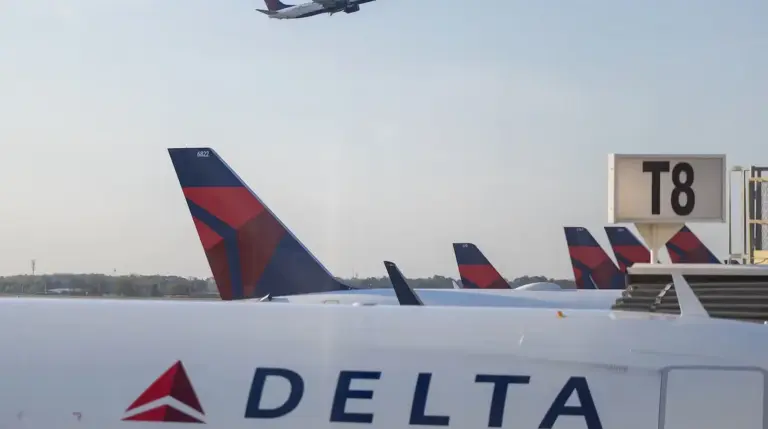
Travelers facing a chaotic Sunday can finally breathe a sigh of relief as Delta Air Lines confirmed that its automated weight and balance calculation systems are back online. The technical failure forced flight crews to perform critical safety calculations by hand throughout the day, leading to widespread delays and cancellations across the network. While the airline expressed regret for the disruption, the glitch created a ripple effect that left thousands of passengers stranded at airports.

Out of approximately 5,000 scheduled flights between Delta and Delta Connection, about 70 percent of the disruptions were tied directly to this automation crisis. The remaining chaos was attributed to poor weather conditions and air traffic control restrictions in New York City and across the Northeast. To manage the backlog, Delta collaborated closely with air traffic controllers to prevent gate congestion, particularly at its massive hub in Atlanta.

To make amends for the turmoil, Delta has launched a comprehensive recovery effort focusing on rebooking displaced passengers onto the fastest available itineraries. For those stuck overnight or waiting hours for departures, the company is providing meal vouchers and hotel accommodations. In cases where flights were canceled entirely and travelers no longer wish to fly, full refunds are being offered.

Company officials emphasized that canceling flights remained a last resort as they fought to maintain their schedule amid the digital blackout. Despite the stress caused by the ground stop and subsequent delays, leadership praised employees for maintaining professionalism while utilizing tedious manual processes to keep planes moving safely until the software could be restored.

Travelers at Hartsfield-Jackson Atlanta International Airport faced a chaotic Sunday as a technical failure within Delta Air Lines’ operations triggered widespread disruptions. A malfunction in the airline’s weight and balance system, which is critical for calculating aircraft safety during takeoff, led to delays for more than 1,600 flights across the country. Nearly half of all Delta departures on Sunday were pushed back by at least fifteen minutes, leaving thousands of passengers stranded or waiting in long lines.

The timing of the outage added significant stress to an already tense travel season, coming just as millions began heading home for the Thanksgiving holiday. This incident follows closely on the heels of a separate Federal Aviation Administration ground stop caused by telecommunications issues, though officials were quick to clarify that Sunday’s turmoil was strictly internal to Delta and unrelated to broader air traffic control systems.

To keep planes moving while engineers worked on a fix, Delta crews resorted to manual calculations to ensure every flight remained safe for departure. The company eventually confirmed that the systems had returned to normal operation and explicitly ruled out any cyberattack or hacking attempt as the cause of the glitch.

In response to the disruption, Delta announced it is working to rebook affected travelers onto alternative itineraries. The airline stated it would provide meal vouchers and hotel accommodations where necessary, while offering full refunds to those whose flights were canceled and who chose not to reschedule their trips.

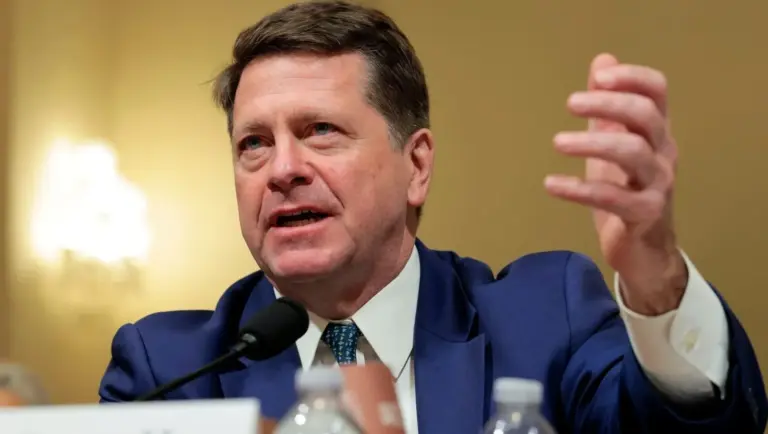
National Intelligence Director Jay Clayton has cautioned the public to expect further technical disruptions as the United States works to modernize its digital infrastructure for the era of artificial intelligence. Speaking on CNN’s State of the Union, Clayton suggested that recent failures affecting everything from airline schedules to email services are likely symptoms of necessary system upgrades rather than malicious activity. He noted that whenever there is a significant leap in computing power and application capabilities, some instability is inevitable during the transition.

These warnings come at a particularly sensitive time, arriving just before the Thanksgiving holiday rush when millions of travelers rely on seamless connectivity. Recent chaos included a nationwide aviation ground stop attributed to router updates and widespread issues with Microsoft Outlook caused by network capacity adjustments. While these events sparked fears of a coordinated cyberattack, government officials have largely dismissed those concerns, framing the glitches instead as side effects of essential maintenance.

The sentiment was echoed by Treasury Secretary Scott Bessent, who urged citizens not to panic about the stability of their financial institutions despite ongoing security patches designed to thwart AI threats. Comparing these software updates to a medical vaccine, Bessent argued that while users might experience temporary discomfort or minor glitches, these steps are vital for building long term resilience against future vulnerabilities. Together, the administration’s message is clear: short term headaches are the price of securing the nation’s digital future.