Archive

November 2026

Browsing

Kalshi is preparing to expand far beyond its roots as a prediction market by introducing direct trading for stocks and exchange traded funds. According to sources familiar with the strategy, the company intends to launch these services later this year. This move follows Kalshi’s strategic acquisition of FB Securities, a New York based brokerage firm that will provide the necessary infrastructure and licensing to facilitate traditional equity trades on the platform.

This pivot represents a broader effort by Kalshi to transform from a niche betting site into a diversified financial hub. While the platform gained massive notoriety recently for allowing users to wager on political elections, weather patterns, and sporting events, it has spent much of the last few months testing more conventional financial instruments. The company already introduced cryptocurrency and precious metal perpetual futures over the summer, followed by perpetuals for several individual stocks just this month.

Despite this growth, Kalshi continues to navigate a treacherous regulatory landscape. Although it operates under the oversight of the Commodity Futures Trading Commission, the company is currently locked in a dispute with various state governments. These officials argue that some of Kalshi’s event contracts are essentially illegal gambling operations that should fall under state jurisdiction rather than federal commodity laws. Legal analysts suggest that this friction could eventually lead to a definitive ruling from the Supreme Court.

Tensions are mounting at British Columbia’s Highland Valley copper mine as more than 1,200 workers enter their fourth week on strike against Teck Resources. The walkout, which began on October 24, stems from a breakdown in negotiations between the company and members of United Steelworkers Local 7619. While Teck maintains that the facility continues to operate at a reduced capacity with specific focus on safety and environmental management, the union suggests that productivity has plummeted to roughly ten percent of normal levels.

The conflict has shifted into a legal battleground, with both sides trading accusations of misconduct. Union leadership has claimed that Teck violated provincial labor codes by utilizing replacement workers and contractors to fill gaps left by strikers. In response, the mining giant has turned to the BC Supreme Court, filing a civil claim that alleges striking employees have used threats and obstruction tactics to block access to the site. As part of this legal push, the company is currently seeking an injunction against the picketing workers.

At the heart of the dispute are deep seated disagreements over compensation and working conditions. The union is fighting back against a proposed twenty five percent cut to future pension contributions while raising alarms over chronic staffing shortages and health hazards, specifically citing silica dust exposure and aging equipment. Union representatives argue that these demands for concessions are unjustifiable given Teck’s recent profitability and financial standing.

The struggle has now gained broader momentum through a hot edict issued by the BC Federation of Labour, which urges affiliated unions to stop handling or transporting materials coming out of Highland Valley. This strategic move aims to squeeze Teck economically until a fair collective agreement is reached. Despite the ongoing instability on the ground, Teck remains optimistic about its long term outlook, keeping its production forecasts steady in recent quarterly reports regardless of the current labor turmoil.

As the global race to build out artificial intelligence infrastructure accelerates, a surprising beneficiary is emerging in the form of platinum. According to recent research from Metals Focus, the massive wave of investment pouring into AI data centers and high end electronics is carving out a critical new niche for the precious metal. This shift comes at a pivotal moment for the industry, providing a necessary cushion against falling demand in the automotive sector, where the rise of electric vehicles has diminished the need for traditional exhaust aftertreatment systems.

Much of this newfound appetite stems from the hidden components required to keep AI servers running efficiently. Specifically, the production of electronic grade fiberglass used in complex printed circuit boards requires platinum rhodium alloy bushings. These specialized tools are essential because they can survive extreme temperatures exceeding 1,450 degrees Celsius without corroding or warping, ensuring that fibers remain consistent and free of contaminants. Without these durable materials, the sophisticated hardware powering today’s large language models would be far more difficult to manufacture at scale.

Beyond circuitry, platinum is playing a quiet but vital role in how data moves across networks. The development of high speed optical modules and co packaged optics depends on optoelectronic crystals grown in platinum crucibles to prevent impurities that would otherwise degrade signal performance. Additionally, advancements in high capacity hard drives using heat assisted magnetic recording are relying on platinum sputtering targets to push storage limits further.

Industry experts expect this trend to intensify over the coming years. Edward Sterck of the World Platinum Investment Council suggests that while some platinum goes directly into hardware, the real growth lies in expanding production capacities for specialty glass and optical crystals. Projections indicate that industrial demand could see significant jumps by 2026, particularly within electrical and glass applications. While the ultimate impact depends on how quickly AI technology evolves, it is clear that platinum is transitioning from being primarily a car part component to becoming a cornerstone of modern computing infrastructure.

Ivanhoe Atlantic is making a strategic move into South Asia after signing a non-binding memorandum of understanding with Mari Minerals to launch an exploration joint venture in Balochistan. This partnership aims to unlock the untapped geological potential of the region, specifically focusing on greenfield exploration across various licenses. While the two companies must still navigate the complexities of shareholder agreements and regulatory approvals, Ivanhoe Atlantic expects to take the lead in operating the newly incorporated venture.

The timing of this deal aligns closely with global shifts toward securing critical mineral supply chains. According to Executive Chairman J. Peter Pham, the initiative has seen encouragement from both U.S. and Pakistani federal authorities, driven largely by the surging demand for copper needed for artificial intelligence infrastructure, power grid upgrades, and defense manufacturing. To solidify its presence in the region, reports indicate that Ivanhoe Atlantic is already in the process of establishing a local office within Pakistan.

Balochistan serves as a high-stakes arena for mining interests due to its massive resource deposits, most notably represented by Barrick Gold’s Reko Diq project which boasts millions of tons of copper and ounces of gold. By partnering with Mari Minerals, the mining arm of energy giant Mari Energies, Ivanhoe Atlantic hopes to capitalize on similar opportunities within the Chagai belt. For Pakistan, this represents another step in a broader effort to attract foreign capital through targeted concessions for international firms during ongoing trade negotiations with Washington.

Despite the optimism surrounding these discoveries, the path forward remains challenging given the regional climate. The industry continues to keep a close eye on security concerns throughout Pakistan and the wider Middle East, factors that have previously led other major players like Barrick to extend their operational reviews. Nevertheless, leadership at Ivanhoe Atlantic remains focused on mobilizing a technically rigorous program to prove that Balochistan can become a cornerstone of the global transition toward electrification and advanced technology.

Gareth Soloway, the chief market strategist at VerifiedInvesting.com, is casting a wide net over the financial horizon as he reveals his specific price targets for several major assets heading into 2027. By analyzing trends across gold, silver, oil, and Bitcoin, Soloway aims to provide investors with a roadmap for navigating the volatility of both traditional commodities and digital currencies over the next few years.

While his eyes are set on the long term, Soloway remains focused on immediate technical levels for gold that could trigger significant movement. He believes that maintaining a position above 3,885 dollars per ounce is currently the most critical factor for bulls to watch. According to Soloway, breaking through that threshold along with the 3,900 dollar mark would drastically shift the probability toward further gains.

The strategist indicated that if these key resistance levels are cleared, he sees a clear path forward for the precious metal. In fact, he noted that once those markers are surpassed, he intends to become an aggressive buyer as he looks toward higher valuations. This combination of short term tactical entries and multi year projections highlights his current confidence in hard assets as hedges against broader economic uncertainty.

Canada’s biotechnology landscape is currently witnessing a surge of high stakes innovation, with several homegrown firms capturing investor attention through breakthroughs in neurology and specialized medicine. According to recent performance data from the Investing News Network, a handful of companies listed across the TSX, TSXV, and CSE have seen remarkable year over year growth as they push toward critical regulatory milestones. Leading the pack is BetterLife Pharma, which saw its value skyrocket by over 228 percent thanks to its work on non hallucinogenic derivatives intended to combat chronic migraines and cluster headaches. With a fresh infusion of 100 million dollars in capital, the firm is now pivoting toward essential human trials under the gaze of the US Food and Drug Administration.

The trend toward psychedelic medicine continues to gain momentum via PharmAla Biotech, which has successfully carved out a niche supplying clinical grade ingredients for PTSD treatments globally. By expanding its reach into Australia and New Zealand while securing key patents for cost effective manufacturing, PharmAla has positioned itself as a primary infrastructure provider for an emerging class of psychiatric care. Meanwhile, Fennec Pharmaceuticals is seeing substantial financial returns from Pedmark, a unique injection designed to protect children from hearing loss during chemotherapy. Their success isn’t limited to North America; strong second quarter sales figures have paved the way for aggressive expansion efforts into the Japanese market.

Rounding out the top performers are those focusing on precision delivery and diagnostics. Eupraxia Pharmaceuticals is drawing interest with its proprietary Diffusphere technology, which allows medication to be released slowly at a targeted site in the body—a method showing promising long term remission rates for esophageal inflammation. On the diagnostic front, Microbix Biosystems remains a steady player by providing essential proteins and antigens used by test makers worldwide. Despite some volatility in Chinese distribution markets, Microbix continues to narrow its losses and expand its footprint among global laboratory suppliers, illustrating a diverse appetite for both moonshot therapies and foundational medical tools within the Canadian ecosystem.

New York City Mayor Zohran Mamdani announced the disbanding of the NYPD’s Strategic Response Group (SRG) on Monday, saying the city will now pursue a “civilian-led approach” to responding to protests.

Mamdani made the announcement alongside Police Commissioner Jessica Tisch, stating that the SRG’s counterterrorism functions will be folded into an existing command, while a brand-new organization will now lead protest response, the Community Dialogue and De-escalation Division (CDDD).

The CDDD, which will lie within the Mayor’s Office of Community Safety, will work to “improve the NYPD’s protest response” via a specialized “dialogue team,” known as the First Amendment Support Team (FAST), they said.

“The CDDD will not have weapons or arrest powers. FAST will consist of 30 uniformed officers trained in communication and de-escalation. The NYPD will also establish a new Patrol Support Division (PSD), a unit within the NYPD’s Patrol Services Bureau, with vetted officers who will spend most of their time on patrol-related duties and receive specialized crowd management training to support responses to demonstrations,” the mayor’s office said in a statement.

NYC MAYOR ZOHRAN MAMDANI SAYS HE WON’T FIRE NYPD COMMISSIONER JESSICA TISCH DESPITE SOCIALIST PRESSURE

“During our campaign, I promised New Yorkers that we would disband the Strategic Response Group and separate counterterrorism from protest response, and today we are delivering on that promise,” Mamdani said in a statement.

MINNEAPOLIS PROGRESSIVES TURN ON GEORGE FLOYD-ERA PUBLIC SAFETY OVERHAUL, PUSH TO DISMANTLE OFFICE

“New Yorkers exercising their constitutional right to protest should not be met with the same police response as a terrorism threat. We are establishing a new, civilian-led approach that prioritizes dialogue, engagement and de-escalation,” he added.

The reforms also impose new restrictions on the tools police are allowed to use when responding to protests, including codified bans on kettling, long guns and tear gas. Pepper spray will also not be used as a crowd management tool, and “long-range acoustic devices” will be limited to 90 decibels.

MAMDANI, NYPD GIVE SECURITY UPDATE AHEAD OF JEWISH HIGH HOLY DAYS, 9/11 25TH ANNIVERSARY

Under the previous structure, the NYPD said the SRG responded to citywide mobilizations, civil disorders and major events and was a “critical asset” during parades, protests and the papal visit. SRG personnel were “also deployed to areas requiring an increased police presence due to increased crime or other conditions” and “mobilizes for shootings, bank robberies, missing persons, demonstrations, or other significant incidents,” according to the department.

Tisch noted at a March budget hearing that the SRG did not typically deal with peaceful protests, but was deployed for protests that involved criminal activity. She also noted that in 2025, the NYPD facilitated 4,255 protests and the SRG was available at 245 of them, or roughly 6%.

President Donald Trump offered a brief, unexpected response about North Korea during a White House gaggle Monday, adding a new wrinkle to his closely watched trip to Asia this week.

Trump suggested North Korean leader Kim Jong Un could make an appearance during his China trip, telling reporters, “We might have Kim Jong Un. He may come, I don’t know. That’s up to President Xi.”

The comment came in response to a reporter’s question about the upcoming high-stakes meetings between Trump, Chinese President Xi Jinping, and Russian President Vladimir Putin at the sidelines of the Asia-Pacific Economic Cooperation (APEC) Leaders’ Meeting in Shenzhen, China, and whether the trio planned to discuss North Korean nuclear capabilities.

PRESIDENT TRUMP TO HOLD HISTORIC TRILATERAL SUMMIT WITH XI AND PUTIN

Trump and Kim last met in 2019, when their Hanoi summit ended without an agreement on North Korea’s nuclear program. Nonetheless, Pyongyang has since expanded its nuclear and missile capabilities, while efforts to restart talks have stalled. In August, Trump said he expected to meet Kim “later this year,” but North Korea pushed back, with Kim Yo Jong saying the leaders’ relationship remained “excellent” while accusing Washington of maintaining hostile policies toward Pyongyang, Fox News Digital reported at the time.

Meanwhile, a U.S. official said last week, according to ABC News, that there were no plans for North Korea engagement during Trump’s Asia trip, and experts say the country is unlikely to feature prominently in the trilateral talks.

South Korean news outlet Yonhap News Agency reported Monday that South Korea’s Foreign Ministry said it hoped high-level talks on the sidelines of the APEC summit would contribute to peace and stability on the Korean Peninsula. South Korean Foreign Minister Cho Hyun reportedly raised the possibility of renewed U.S.-North Korea dialogue at the summit with his Chinese counterpart, Wang Yi, in Beijing on Friday, stressing that South Korea has vital interests in Korean Peninsula issues and hopes that its perspective is taken into account.

NORTH KOREA MISSILE COULD PUT GUAM IN RANGE AS KIM REBUFFS TRUMP OUTREACH: EXPERT

The South Korean news agency also reported Monday that Andrew Yeo, a senior fellow at the U.S.-based Brookings Institution, said North Korea’s nuclear program is unlikely to be discussed at the summit, citing differences between Washington and Moscow over Pyongyang’s nuclear ambitions. The report also highlighted comments from Korea Economic Institute senior fellow Ellen Kim, who reportedly suggested the leaders could briefly discuss North Korea behind closed doors, but nuclear arms control and the war in Iran are likely to take priority. Ellen Kim added that Xi or Putin could relay a message from Trump to Kim Jong Un, though they may be reluctant to support U.S.-North Korea negotiations for fear of losing influence over Pyongyang.

The trilateral meeting is scheduled for 2:30 p.m. Thursday local time at Shenzhen Kylin Villa, according to Trump’s public schedule.

White House spokeswoman Olivia Wales said Friday that Trump planned to discuss nuclear arms reduction with Xi and Putin, while a senior U.S. official said Iran would also be on the agenda. The Associated Press reported Monday that Trump plans to raise Russia’s war in Ukraine at the meeting as well.

Asked Monday what it would take for Putin to back down from the war in Ukraine, Trump said he thinks Putin “is backing down a little bit.”

SIGN UP TO GET THE POLITICS NEWSLETTER

“I think he’s backing down a little bit. I think he could be tougher,” Trump told reporters Monday outside the White House. “I think it could be a lot tougher, frankly.”

Fox News Digital has reached out to the White House for additional comment.

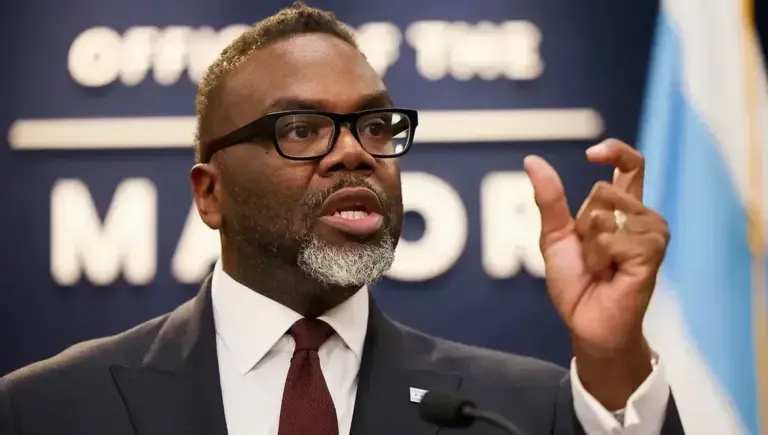
Chicago’s chief financial officer, who formerly worked for a top credit ratings bureau, resigned Friday citing financial integrity concerns, casting a shadow over the fiscal management of progressive Mayor Brandon Johnson amid a fight over the FY-2027 budget.

Chicago CFO Ashlee Gabrysch served only three months before the onetime Fitch Ratings executive stepped down, saying she could no longer meet her professional obligations under the conditions of her employment, according to a resignation letter obtained by the Chicago Tribune. 

“The chief financial officer’s statements about the city’s finances are relied upon by investors, rating agencies, City Council, and taxpayers, and they must be complete and accurate,” Gabrysch wrote, according to the Tribune.

“I am not able to fulfill those obligations under the conditions in which I have been asked to serve.”

Johnson did not immediately respond to Fox News Digital’s request for comment, but his press secretary accused Gabrysch of being “largely absent” during key parts of the next budget’s creation process.

CHICAGO MAYOR CALLS ICE RAIDS ‘TERRORISM,’ SAYS TRUMP’S AMERICA APPEARS AS ‘IF THE CONFEDERACY WON’

The mayor’s office also accused Gabrysch of improperly directing a $75 million payment to city pension funds before the required legal procedures had been completed, saying it would refer the matter to Chicago’s Office of Inspector General for review.

The Tribune recounted recent events in the budget process involving Gabrysch, including that she disagreed with Johnson over assertions about the size of the city’s deficit.

In September, Johnson announced that the Windy City faces a projected $882 million budget shortfall in 2027, which local media described as smaller than a typical election year and lighter than the $1.15 billion deficit projected in 2025. The city holds its elections in odd years.

“We have difficult and consequential decisions ahead of us as we work to address the structural financial challenges that have confronted Chicago for decades,” Johnson said at the time, according to Chicago’s PBS affiliate.

However, according to the Tribune, Johnson claimed the true figure is now $662 million, “adjusted” in concert with planned borrowing to help fund settlement amounts involving police officers.

CHICAGO MAYOR CALLS DOGE AN ‘ACT OF WAR’

Gabrysch challenged that accounting during budget hearings, arguing that the settlement expenses should remain part of the deficit and that borrowing to pay them amounted to a temporary fix rather than a lasting solution.

While the administration maintained that 76% of its budget measures addressed underlying financial problems, Gabrysch calculated the figure at just 56%, according to the Tribune.

Alderman Marty Quinn, D-Midway, questioned Johnson’s handling at the time, according to the paper, saying he was “not surprised that the mayor may be a little disingenuous here, that seems to be his normal course.”

Gabrysch also stopped short of calling Johnson’s proposed $17.6 billion budget balanced during an October City Council hearing, arguing that the city needed to demonstrate progress toward reducing future deficits, according to Crain’s Chicago Business.

City Comptroller Michael Belsky maintained that proposed revenues matched expenditures, while acting Budget Director Jonathan Ernst defended the administration’s calculations and its plan to borrow roughly $480 million to cover legal settlements.

Gabrysch warned that the city anticipated issuing $350 million in settlement-related bonds in 2027, with an estimated $190 million in interest costs over seven years, according to Crain’s.

A coordinated social media operation aimed at influencing voters ahead of the midterm elections was led in part by an 80-year-old socialist organizer who spent decades helping build the modern left’s activist infrastructure, according to tax records reviewed by Fox News Digital.

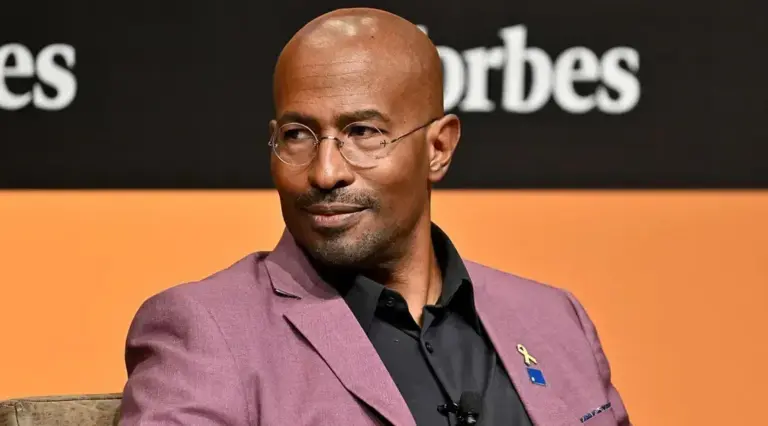
“The Republicans never figured out what we were doing,” political commentator Van Jones said earlier this month on CNN’s “The Source” with Kaitlan Collins. “There’s something called the American Accountability Network: tens of thousands of online humans, not bots, coordinated to make the affordability message a winning message online … Don’t get mad at me. I was given permission to reveal this.”

The American Accountability Network (AAN), which incorporation documents show was founded in early 2025, is an online activist organization that recruited both large content creators, as well as everyday Americans, and tasked them with posting, sharing and otherwise amplifying rhetoric that framed Democrats as the party of affordability — a message that exit polls suggest resonated with the electorate.

Tax documents identify the woman behind the effort as Heather Booth, AAN’s president and an 80-year-old self-described “socialist feminist” who has been deeply involved in far-left activism since the anti-war movement of the Vietnam era.

DEMOCRATS SAY THEY’LL MAKE LIFE AFFORDABLE. YOUR WALLET MAY DISAGREE

Podcaster and former FBI Deputy Director Dan Bongino didn’t buy into Jones’ claims that AAN played a large part in determining the midterm elections earlier this month. 

“Are influencers really influencing you? Or are the influencer days numbered as people wake up to the grift. Folks, I’m leaning more towards the latter,” Bongino said on the Nov. 9 episode of his show. “I don’t buy any of this. … Maybe they had some effect in certain places. My humble opinion, I don’t believe it … I’m not sure the social media ecosystem had the effect Van Jones is saying it does. I heard the same thing, the exact same argument was used to say Donald Trump stole the election through Russian Facebook ads. And that was crap, too.”

“Van is selling himself for the next campaign; I’m not buying it,” Bongino told Fox News Digital.

Booth’s decades of socialist activism are documented extensively in the historical record, including in her own correspondence. In the mid-1970s, Booth and her husband were key allies of the Democratic Socialist Organizing Committee, a precursor to the Democratic Socialists of America, helping the fledgling organization build ties with community groups and draft a high-profile manifesto aimed at pushing the Democratic Party economically leftward, according to letters Booth wrote in 1975.

Booth also disclosed in an interview that she was a founding member of the Chicago chapter of the Women’s International Terrorist Conspiracy from Hell (WITCH), what she described as a “guerrilla theater” group that staged provocative protests ranging from releasing mice at a bridal fair, staging mock curses against financial institutions and using hair and nail clippings in a mock hex protesting the dismissal of a women’s liberation activist who advocated overthrowing capitalism from the University of Chicago.

In a 1972 socialist feminist manifesto, Booth and her co-authors advocated for disarming police, publicly funded abortions and significant redistribution of wealth, while describing capitalism as an “institutionalized form of oppression.”

Booth’s late husband, whom she worked closely with throughout her career, was no less prolific or radical than she was.

RADICAL SOCIALIST WING’S HUGE NIGHT REVEALS ASCENDING CLOUT WITHIN DEMOCRATIC PARTY

Paul Booth is credited with authoring portions of the Port Huron statement, which framed American anti-communism as corrosive to democracy, proposed transferring certain national powers to international institutions as part of disarmament and called for greater democratic control of economic life.

Booth’s husband also served as national secretary of Students for a Democratic Society, a leading New Left organization that fractured in 1969 amid ideological infighting, with one faction giving rise to the militant Weather Underground. While Heather was also an SDS member who left before the Weathermen seized control, not all of her activism was legally above board.

In interviews, Booth has admitted to founding Jane, or the Abortion Counseling Service of Women’s Liberation, an organization that helped women obtain over 11,000 underground abortions before the Supreme Court mandated that the practice be legal nationwide in 1973. Law enforcement arrested seven women working for the organization in 1972 for abortion and conspiracy to commit abortion, though the charges were dropped following the court’s decision.

As Jane’s operations shuttered, Booth turned to a new aim: training the next generation of activists. Booth helped establish Midwest Academy, which incorporated in 1972 and began offering general organizing training in 1973, building an institution that says it has trained more than 50,000 organizers.

AAN, Jones and Booth did not respond to requests for comment when reached by Fox News Digital.

While the individuals who lead AAN through their midterm messaging campaign are clearly disclosed in tax forms, the funding behind the effort is more opaque. Nonprofit tax disclosures operate on a roughly one-year delay, meaning that financial information is only available for its 2025 tax year, when most of its election-related activities occurred in 2026.

MEMBER OF LARGEST TEACHERS UNION IN US CLAIMS ORG IS ‘NO LONGER FOCUSED ON CHILDREN,’ ONLY ‘POLITICAL POWER’

What tax documents do exist, however, begin to paint a picture of the financial forces behind AAN’s social media push.

Of the roughly $280,000 AAN reported raising in 2025, $200,000 came from the American Federation of Teachers, the second-largest teachers labor union in America, according to its LM-2 disclosure. Receiving approximately 70% of its funding from a labor union during its inaugural year of operation was not AAN’s sole link to organized labor, however.

Midwest Academy, where Booth still serves as chairwoman, has done considerable work training union officials over the course of its history. Union financial disclosures show that labor unions such as the National Education Association, AFL-CIO, American Federation of Teachers (AFT) and the Service Employees International Union (SEIU) have collectively pumped roughly $2 million into the organization Booth founded since 2020.

Booth also directed the AFL-CIO’s healthcare campaign in 2008, helped run SEIU unionization efforts, and her late husband was a longtime American Federation of State, County and Municipal Employees (AFSCME) organizer and leader, according to her website and oral histories about her life.

‘DARK MONEY’ GROUP ACCUSED OF ‘SCHEME’ TO TIP ELECTION IN FAVOR OF DEMOCRATS, MANIPULATE GOP VOTERS

The ’70s-era radical was not the only AAN leader to have ties to the labor movement.

Rio Tazewell, the director of the organization, has served on working groups alongside union leadership and Reggie Hubbard, identified as a leader on incorporation documents, works with major unions on education efforts and has a board seat at a union-backed nonprofit. AAN’s public-facing website, in fact, identifies the AFL-CIO, AFT, SEIU and AFSCME as organizations it has worked with.

AAN partnered with an organization called DemCastUSA, which has received $613,500 from the SEIU since 2022, to promote at least some of its social media amplification efforts. Former Democratic Sen. Doug Jones, who received significant support from organized labor during his political career, sits on DemCastUSA’s board.

As AAN worked to amplify Democratic messaging across social media ahead of Election Day, Americans viewed Republicans as more politically extreme than Democrats, according to Gallup polling. The survey found that 59% of Americans considered the Republican Party too extreme, compared with 43% who said the same of Democrats. AAN’s social media boosting strategy sought to reinforce favorable perceptions of Democrats and pin Americans’ economic anxiety on GOP policies, though the polling does not establish whether the campaign influenced those views.

Alongside DemCastUSA, AAN ran a program called “Amplifier Army” that aimed to give left-of-center voices a privileged slot in social media algorithms by coordinating interactions that would give such posts a larger reach.

“Together, we’re building a network of organizers, creators and everyday people who use their social media to flood the feed with the content and calls to action that move this fight forward — at the inflection points where public pressure actually shifts the outcome,” a sign-up page for the program reads. Participants are invited to “share coordinated priority content at the moments that matter most” and “amplify calls to action from movement partners across all major platforms.”

FAR-LEFT GROUPS PIVOT FROM MAY DAY PROTESTS TO MOBILIZE VOTERS FOR 2026 MIDTERMS, PUSHING DEMS LEFTWARD

Fox News Digital attended an Amplifier Army training session earlier in November, obtaining an audio recording, screenshots of the pitch deck shown to participants, a link to the program’s group chat and an invitation online platform used to coordinate social media engagement.

The WhatsApp group chat only has around 80 members. However, during the training session, the organizer in charge mentioned that they had recently created a new chat because their original forum on Signal had reached maximum capacity. The maximum number of participants in a Signal chat is 1,000.

At the end of the presentation, participants were instructed to create an account on an online app called ProSocial. The platform feeds an array of posts to users, all from mid-to-large Democratic-aligned social media accounts, and instructs users to like, comment, share, save and repost the content in question. Points are assigned for each action and the individual who gets the most points at the end of every month receives a prize from the organization.

A slide included in the training session’s slide show indicated that posts with partnered accounts selected for amplification saw a double-digit increase in shares and likes relative to posts from partners held back from amplification at random. Fox News Digital was not able to independently verify this data.

The organizer running the training session claimed that those behind the Amplifier Army coordinated with socialist activists in Brazil to help build their system, seeking to emulate the online push that helped Luiz Inácio Lula da Silva win an upset victory in Brazil’s recent presidential election.

Despite the considerable reach AAN claims for its social media operation, questions remain about how much influence the effort actually had on the midterm elections. Increased energy costs, rising grocery bills and stubbornly high housing prices, for instance, gave Americans reasons to be dissatisfied with the administration, regardless of what they did or didn’t see on social media.

Additionally, even with a thousand active members dutifully boosting posts curated by AAN, it is unclear how much of a difference that could have made on social media platforms trafficked by billions of users.

That said, AAN claims to include massive left-leaning media outlets in its network, including ​​MeidasTouch, which consistently generates hundreds of millions of monthly views and downloads.