Archive

November 2026

Browsing

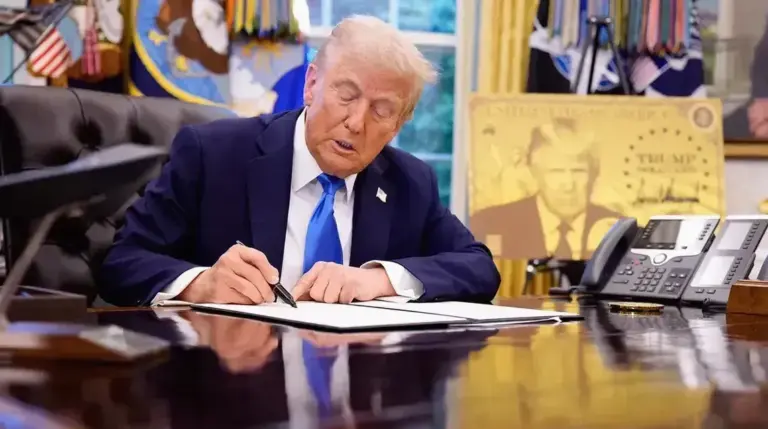
After President Donald Trump signaled in a “60 Minutes” interview that aired shortly after the midterm elections that he was willing to “work on a deal” with Democrats to allow some illegal immigrants to gain legal status, Fox News Digital spoke with several immigration experts about the potential ramifications of such an agreement.

The interview came just days after Republicans suffered crushing losses in the midterm elections, raising questions about whether Trump might be willing to compromise on immigration. But the president later ruled out amnesty, saying, “There won’t be amnesty,” while maintaining that his immigration policy had not changed.

While Trump has not outlined a specific proposal, his comments have raised questions about what a potential deal could look like and how granting legal status to some illegal immigrants could impact the rule of law, assimilation and fiscal policy.

TRUMP ADMITS IMMIGRATION ENFORCEMENT MAY HAVE BEEN TOO ‘TOUGH’ IN FIRST INTERVIEW SINCE MIDTERMS

Fox News Digital spoke with three immigration experts about what a potential agreement could mean for the country, including its impact on the rule of law, assimilation and taxpayers.

Rule of Law:

“I think one of the first things we have to always consider is the impact on the rule of law and does it undermine it. It’s very hard to argue that the best way to restore the rule of law and deal with illegal immigration is to reward some large fraction of people who’ve broken the law,” said Steven Camarota, the director of research at the Center for Immigration Studies (CIS).

Camarota believes that amnesty begs the question of basic fairness, and impacts how people who have come to the United States legally view the immigration system.

“It seems like it mocks them,” he said.

He used the example of a person who illegally overstays a visa to illustrate his point, saying that person shouldn’t be rewarded with citizenship after overstaying a visa, especially when there are millions of people who have already followed the law and left the country when their visas expired.

Laura Collins, director of immigration policy at the George W. Bush Presidential Center, acknowledged those concerns but argued that the country’s immigration laws are part of the problem.

AMERICA NEEDS WORKERS, BUT TRUMP’S POLICIES ARE SHARPLY CUTTING LEGAL IMMIGRATION

“I understand people’s concerns about the rule of law,” said Collins. “I also think you have a set of immigration laws that are not working as intended. The reason we have so many people who are here undocumented is because we have an economy that pulls in a lot of people’s work, but an immigration system that restricts that labor flow.”

She says the United States is at a crossroads: the country can choose a system where illegal immigrants cannot stay and fix their mistakes while also contributing to the economy, or they can stay and be offered a chance at restitution.

“Almost every single piece of legislation that has had a chance at passage on immigration that involves legalization program has had things like paying back taxes, going through a background check, paying some sort of fine or fee or restitution payment in order to make up for the fact that these people did something illegal by either overstaying a visa or crossing the border,” she said.

But Camarota questioned whether a future amnesty agreement would actually require immigrants to complete those restitution payments before obtaining citizenship.

Assimilation:

Camarota also said that one of the main reasons for restricting immigration in the first place is to ensure that the United States isn’t overwhelmed.

“We don’t want the numbers to be so large that they overwhelm the assimilation process, where you can go to a school where everyone’s from your background or you don’t ever have to learn English, because there’s enough people around you who you don’t [and] who you speak your native tongue So that’s one reason to limit immigration,” he said.

“In effect, an amnesty throws that out the window and says, well, we have these limits, but we’re not going to enforce them,” he continued.

TRUMP SAYS DEPORTATION PUSH HASN’T PUT ‘SAME PRESSURE’ ON FARMWORKERS, HOTEL STAFF: ‘NOT EVEN CLOSE’

Drawing from the findings of a 2022 book called “Streets of Gold: America’s Untold Story of Immigrant Success,” Collins argued that today’s immigrants are assimilating at a pace similar to that of immigrants of prior generations. America’s current foreign-born population has matched a historic peak similar to late 1800s and early 1900s levels. About 15% of the current population is foreign-born.

The book, she said, compared people’s memories of how their grandparents and great-grandparents assimilated when they came to the United States.

“And what they found was actually that immigrants are integrating it pretty much the same rates,” she said.

She also said that work helps people to assimilate faster, and thus, if illegal immigrants were given the opportunity to work legally, assimilation would be a smoother process.

“I do think that one of the things America really is good at is us taking newcomers and turning them into Americans, and so I worry less about that” she said. “But I understand why there is a scenario where people could be afraid of that. But the data doesn’t support it.”

Fiscal Policy:

Camarota estimated that households headed by illegal immigrants receive approximately $50 billion annually in government benefits, often through programs for which their U.S.-born children are eligible. He cited Medicaid, Supplemental Security Income (SSI), Temporary Assistance for Needy Families (TANF) and free school lunches as examples, although illegal immigrants themselves are generally barred from receiving many federal welfare benefits.

TRUMP TELLS DHS CHIEF TO WORK WITH DEMOCRATS ON IMMIGRATION REFORM, BUT NO AMNESTY

Illegal immigrants use welfare not because they’re lazy, but because most of them do not have educations higher than 11th grade level, Camarota said.

“Legalizing folks doesn’t change the fact that the illegal population is overwhelmingly less educated, and less educated people just don’t pay enough in taxes to cover their consumption of public services, especially when you consider all the means-tested programs they get,” he said.

Low-income people, he noted, simply don’t pay much in taxes.

“Remember, half of all workers pay no federal income tax,” he said. “So, yes, illegal immigrants do pay taxes, and actually we think more than half already work on the books, so there’s no big boon to taxpayers anyway. But now, they themselves will become eligible for welfare programs.”

Collins conceded that while many immigrants have low education levels, he said that that doesn’t mean all of them are working jobs that meet their education skills. She pointed to a 2013 Congressional Budget Office (CBO) analysis of the Gang of Eight’s immigration bill, S. 744, which estimated that the legislation would increase federal tax revenues and reduce federal deficits by approximately $158 billion over 10 years, despite increased spending on government benefits.

“You get a little bit more tax revenue,” she said. “They are potentially making higher wages, they’re able to negotiate for different jobs and different wages because they have that legal work authorization,” Collins said.

HISPANIC VOTERS ARE NATURAL CONSERVATIVES. REAGAN KNEW. GOP NEEDS TO PROVE IT AGAIN

She argued that with legal work authorization, some illegal immigrants would be able to fulfill their full potential in higher-level jobs.

Mark Krikorian runs CIS. He said that while thinking through the pros and cons of amnesty might be a useful thought exercise, the point is probably moot.

“Well, to begin with, it’s not going to happen,” he said of an amnesty deal. The likelihood of anything happening, certainly until the Democrats come in, until the next Congress comes in, and even then, it is, in my opinion, close to zero.”

For two reasons, Krikorian doesn’t think Republicans have leverage to make a deal.

He says Democrats won’t be willing to concede any restrictions on immigration, thus leaving Republicans with no incentive to make an amnesty deal for illegal immigrants.

HOUSE REPUBLICANS MOVE TO MAKE TRUMP’S BORDER POLICIES PERMANENT

He used DACA as an example. Recently, Homeland Security Secretary Markwayne Mullin floated the possibility of a compromise involving DACA recipients — people who came to the United States as children and received temporary protections from deportation — that could give them permanent legal status.

“A DACA amnesty? Frankly, the DACAs already have amnesty. It’s upgrading them from amnesty light to amnesty premium,” he said.

He said the first Trump administration tried making a deal for tighter immigration measures using DACA recipients as a bargaining chip.

“That idea is valuable and could be productive, but there’s no way that upgrading the DACA who already have Social Security numbers and work permits to regular green card status is something that the Democrats would give anything in exchange for,” he said.

But Krikorian warned that giving green cards to DACA recipients could eventually allow them to sponsor additional relatives, including their parents, once they become U.S. citizens, although existing immigration restrictions could prevent some relatives from obtaining legal status.

“And that would have some effects, because once you have a green card, you can petition for certain relatives, and the five-year clock for citizenship starts,” he said. “And when you become a citizen, you could then petition for your parents. There’s no numerical caps for that.”

Trump discussed on “60 Minutes” potentially working out a deal that would allow some illegal immigrants working in industries like hospitality and landscaping to remain in the country.

“When you go into a hotel, and you have a woman that’s working there as a maid, as a cleaner as a this, as a that, as a waitress, a lot of good things, great jobs, and all of a sudden they’re being taken out of the country, it’s tough. It’s a tough thing,” Trump said on “60 Minutes.”

MULLIN VOWS ‘ZERO CHANGE’ ON IMMIGRATION AFTER REPUBLICANS SUFFER CRUSHING MIDTERM LOSSES

He added that people whom he described as “far-right” want deportations regardless of whether the illegal immigrant is working.

The White House, meanwhile, says Trump’s “strong immigration policy remains unchanged,” and White House spokeswoman Lauren Bis told Fox News Digital that Democrats should work with the president to keep the border secure, remove dangerous criminal illegal immigrants from the country and stop drug trafficking.

She said the president’s “commonsense immigration agenda” has resulted in the “most secure border in history.”

SIGN UP TO GET THE POLITICS NEWSLETTER

“If Democrats choose to pursue radical left open border and mass amnesty policies, they are choosing to work against the interests of the American people,” she said.

The Department of Homeland Security did not return a request for comment.

This post appeared first on https://www.foxnews.com
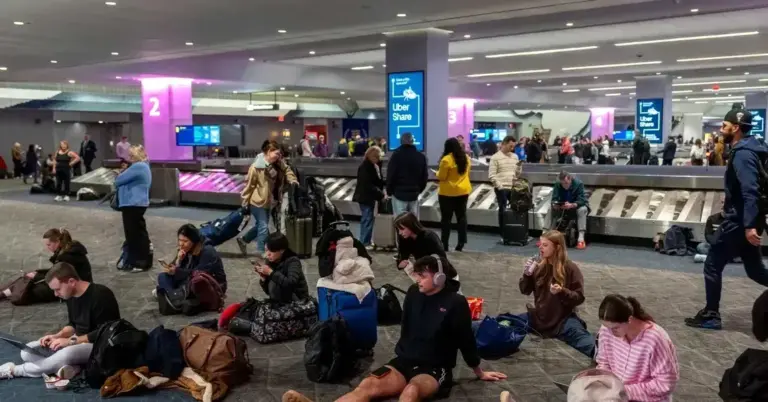
The massive grounding of flights that paralyzed American skies on Friday was not a freak accident, but rather the predictable result of decades of crumbling infrastructure and systemic mismanagement. Internal records and federal audits reveal that government watchdogs had been sounding the alarm for twenty years, warning that the nation’s air travel systems were becoming dangerously obsolete. Transportation Secretary Sean Duffy admitted on Sunday that the entire meltdown might be traced back to a single router that should have been replaced nearly twenty years ago, suggesting that the current crisis is rooted in failure spanning several administrations.

At the center of the controversy is L3Harris, the company tasked with maintaining the aging telecommunications backbone of the Federal Aviation Administration. Despite a track record plagued by missed deadlines and technical glitches dating back to 2002, the FAA continued to pour billions into non-competitive contracts with the firm. An audit by the Office of the Inspector General discovered that the agency improperly extended contracts ten times, essentially choosing administrative ease over quality results. This pattern resulted in hundreds of millions of wasted taxpayer dollars on projects that were eventually scrapped due to persistent failures.

The situation has reached a point where some critical hardware is so ancient that the companies originally responsible for making spare parts have gone out of business entirely. Eric Soskin, the transport inspector general, noted that much of the institutional knowledge required to fix these legacy systems may have simply vanished through retirement. While L3Harris claims it has completed most of its transition from copper wires to fiber optics and remains committed to helping the FAA investigate the crash, critics point out a troubling conflict of interest given how much money the company spends on lobbying members of Congress who oversee its funding.

Secretary Duffy described being stuck with L3Harris until a newer system can be fully implemented, lamenting a relationship where contractors take public funds while providing poor service. As passengers continue to deal with the fallout at airports like LaGuardia, it appears clear that prioritizing short term bureaucratic convenience over long term technological investment created a fragile network waiting for one old piece of equipment to finally give way.

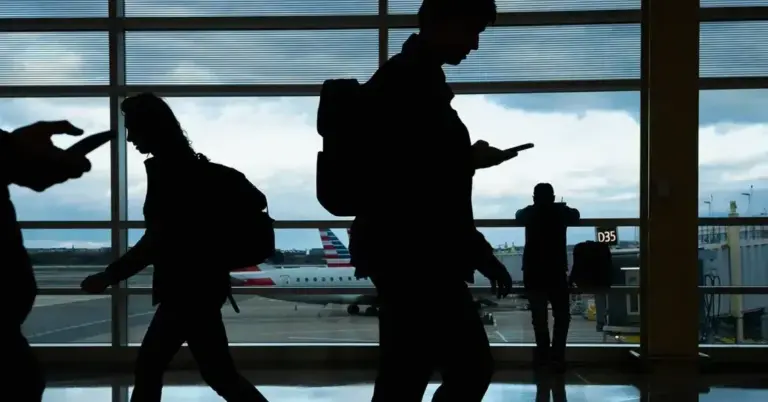
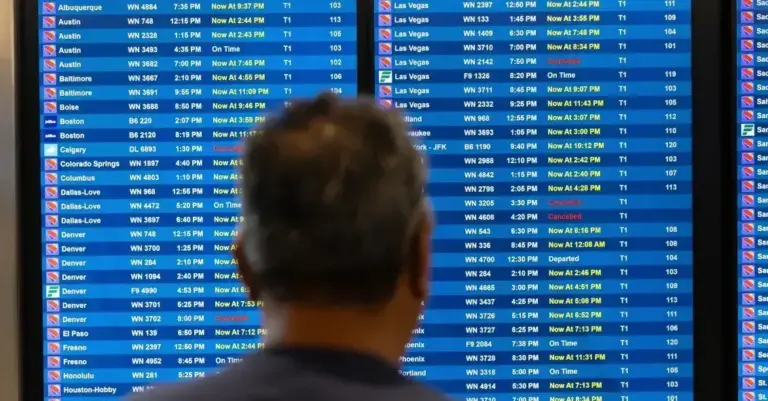
Air travel across the United States began to stabilize on Monday morning, though many passengers continued to deal with the lingering effects of a historic nationwide ground stop. After a weekend defined by chaos, flight delays and cancellations dropped significantly compared to Sunday’s peak. While major hubs like Chicago O’Hare and Dallas-Fort Worth still faced some hurdles, transportation officials expect operations to return fully to normal by Tuesday, providing some relief just ahead of the upcoming Thanksgiving rush.

The crisis began Friday when a technical failure triggered the longest nationwide halt to air travel since September 11, 2001. Thousands of frustrated travelers were left stranded in terminals for days, missing critical business meetings and family events. The disaster was traced back to routine maintenance in Arkansas where a copper-to-fiber line conversion unexpectedly overloaded routers as far away as Texas, creating a domino effect that crippled air traffic control communications across the country.

Transportation Secretary Sean Duffy defended the decision to freeze flights, arguing that the move was necessary to prevent further systemic collapse. Rather than offering an apology, Duffy pointed toward years of neglect and failed modernization efforts under previous administrations. He noted that while the current team is working rapidly to update aging infrastructure, they inherited a fragile system plagued by outdated software and staffing shortages among controllers.

Despite assurances from Homeland Security that there was no evidence of a cyberattack, the event has reignited a political battle over funding for the Federal Aviation Administration. President Donald Trump has called for increased legislative support to modernize the skies, while critics question how existing budgets have been managed. For now, investigators remain focused on why a standard hardware upgrade led to such an unprecedented breakdown in national security and transport logistics.

Warren Buffett has once again turned his attention toward philanthropy, donating approximately 5.5 billion dollars in Berkshire Hathaway shares to four different foundations. This latest contribution sees the 96 year old billionaire converting thousands of Class A shares into millions of Class B shares, which were then distributed among the foundations led by his three children, Susie, Howard, and Peter. Even after this massive gift, Buffett remains an incredibly wealthy man, holding onto assets valued at roughly 162 billion dollars.

In a concise Thanksgiving letter that echoed themes of gratitude and generosity, Buffett reflected on the intrinsic value of compassion. He noted that while kindness is costless, it is also priceless, suggesting that its positive effects compound over time at a rate superior to any financial investment he and the late Charlie Munger ever made. This sentiment served as a poignant reminder of the human element behind one of the world’s most successful portfolios, especially as Buffett acknowledged the mentors who helped him prosper early in his career.

The timing of the donation coincides with a period of exceptional growth for Berkshire Hathaway. While the broader market has faced volatility due to geopolitical risks and concerns over AI infrastructure, Berkshire shares have surged, hitting several consecutive record highs_and significantly outperforming the S&P 500 this year. Investors continue to view the company as a stable safe haven during uncertain economic times.

Beyond the numbers, Buffett used his message to express unwavering faith in the future leadership of his empire and his family. He praised CEO Greg Abel and reaffirmed his total trust in his children’s ability to manage these vast sums for worthy causes. Closing with a piece of timeless advice, Buffett encouraged readers to spend their holiday thanking selfless individuals or becoming a benefactor for someone else in their own lives.

For Amanda Khera, the announcement over the airplane intercom thirty minutes outside of Atlanta felt like a nightmare. Already exhausted from rushing her toddler to a clinic in Belize due to a high fever, she was desperate to get back to Virginia Beach. When the pilot mentioned a cascading communications issue with the FAA, fear took over. Haunted by memories of previous aviation tragedies, including a deadly midair collision over Reagan National Airport in 2025, Khera spent her descent staring out the window, wondering if the pilots were flying blind and if another catastrophe was imminent. While she eventually landed safely, she stepped off the plane into a frozen terminal where over six hundred flights had been canceled as part of a total nationwide ground stop.

The chaos began on Friday afternoon when pilots and controllers across the Midwest noticed their radios becoming garbled and unreliable. At first, those at airports in Grand Rapids and Moline thought it was a localized glitch, but within minutes, reports flooded in that Chicago Approach was going dark. By late afternoon, the FAA issued an unprecedented order halting all departures across U.S. airspace citing extraordinary circumstances. Pilots throughout the country expressed disbelief as they realized the outage wasn’t limited to a single city or region but had paralyzed the entire national air traffic control system.

The culprit behind this systemic collapse was surprisingly small: a single faulty router in El Dorado, Arkansas. As part of ongoing efforts to patch together an aging infrastructure known as the FAA Telecommunications Infrastructure or FTI, contractors replaced an old telephone switch with a newer fiber data router. However, once activated, this piece of equipment began flooding the network with hundreds of connection attempts every second. This surge created a cascading failure that overwhelmed the data backbone provided by L3Harris, which serves as the essential link between thousands of aviation facilities carrying critical voice and radar data.

Experts explain that while modern consumer apps like FaceTime can simply blur video when data is lost, air traffic control requires absolute precision and stability. Even a minor drop in data packets can lead to a complete cessation of vital feeds. Because the FTI lacks these modern redundancies and relies on rigid synchronization sources, one malfunctioning device in Arkansas managed to sever communication for seventeen of twenty-two regional control centers. With a full replacement for this fragile system not scheduled until 2028, passengers and pilots are left questioning how such an outdated architecture remains entrusted with millions of lives daily.

Thousands of JPMorgan Chase customers faced a frustrating start to their week on Monday as a widespread technical outage disrupted both digital banking and in person branch services. Many users reported being unable to access their accounts or withdraw funds, while others found themselves locked out of essential features like Zelle transfers. In a statement released late Monday, the bank clarified that the chaos was caused by a software bug within its on premise hardware systems rather than a cyberattack.

While the bank insisted that all customers still had ultimate access to their funds, they admitted that servicing those clients was taking significantly longer than usual. The ripple effect extended beyond Chase’s own doors, causing transactional slowness for other financial institutions that were processing payments involving Chase accounts. Representatives from Zelle and U.S. Bank both noted that while their own platforms remained functional, any delays were stemming directly from the instability at Chase.

This disruption comes at a particularly sensitive time for American consumers following a string of high profile tech failures over the last seven days. From a forty eight hour Microsoft Outlook blackout to an FAA grounded flight order triggered by a failed facility upgrade, public confidence in critical infrastructure has been wavering. Although there is currently no evidence linking these disparate events, the timing has amplified concerns regarding the reliability of the systems millions rely on daily.

Bank officials worked throughout Monday to patch the glitch, emphasizing that the problem was confined to retail banking operations and did not impact the broader corporate functions of JPMorgan Chase. With nearly ninety four million customer relationships and thousands of ATMs across the country, the scale of the outage highlighted just how quickly a localized hardware error can create national anxiety in an increasingly cashless society.

Inside the halls of Meta, a specific calendar date is becoming a point of obsession for many staff members. Employees have dubbed February 15, 2027, as The Rapture, marking the moment when a massive wave of company share payouts finally concludes. These particular grants were handed out back in 2023 during a period when the company’s stock was struggling, but a subsequent market explosion has turned those once modest awards into absolute fortunes.

Since the start of 2023, Meta’s stock price has surged by over 400 percent, transforming standard equity packages into life-changing windfalls. Andre Nader, a former employee and author of the FAANG FIRE newsletter, suggests that senior engineers might face a staggering drop in their total annual compensation, potentially plunging by more than 40 percent once these high-value payouts dry up. For most people, such a significant pay cut would be a cause for alarm or a reason to seek employment elsewhere.

However, for a select group of lucky veterans, this financial cliff presents an entirely different opportunity. Because the rebound was so aggressive, some employees are reportedly sitting on gains exceeding two million dollars from these grants alone. While corporate benefits often act as golden handcuffs to keep talent locked in place, those shackles lose their grip when an employee reaches true financial independence.

As the deadline approaches, the prevailing sentiment among some of the company’s wealthiest workers isn’t about finding a new role or negotiating a raise. Instead, they are eyeing the exit door entirely. Rather than facing a diminished paycheck in late 2027, many expect The Rapture will simply serve as their official invitation to enter early retirement.

Florida Attorney General James Uthmeier announced Friday that his office will stop defending the state’s ban on bump stocks, signaling the effective end of a law that has been a point of contention since its inception. In a statement shared via social media, Uthmeier argued that the 2018 legislation is unconstitutional and overly broad. He noted that the current wording of the law could unfairly penalize firearm owners using trigger enhancements for lawful purposes, potentially exposing them to five years in prison.

The shift follows a detailed legal opinion from the attorney general’s office, which posits that semiautomatic weapons equipped with such modifications remain protected under the plain text of the Second Amendment. Bump stocks, which accelerate the rate of fire in semiautomatic guns, were first targeted by policymakers after the devastating 2017 mass shooting in Las Vegas. While Florida implemented its own restrictions, the federal government’s attempt to ban the devices was recently struck down by a United States Supreme Court ruling. The high court determined that because these devices still require a trigger to be released and reengaged for every shot, they do not technically turn a weapon into an illegal automatic firearm.

Florida originally codified its ban as part of a comprehensive legislative package passed in 2018 following the tragedy at Marjory Stoneman Douglas High School in Parkland. That sweeping bill combined school safety funding and red flag laws with several gun control measures, including raising the minimum purchase age for rifles to 21. At the time, former Governor Rick Scott championed the measure as an essential step toward preventing future massacres, though it created deep divisions among legislators across both political parties.

This latest move by Uthmeier aligns with long standing criticisms from various conservative figures who viewed the restriction as an infringement on constitutional rights. By refusing to pursue further appeals against convictions related to the ban, the attorney general is essentially clearing a path for these accessory bans to be dismantled within state borders, bringing Florida’s legal landscape closer to the precedent set by recent federal judicial decisions.

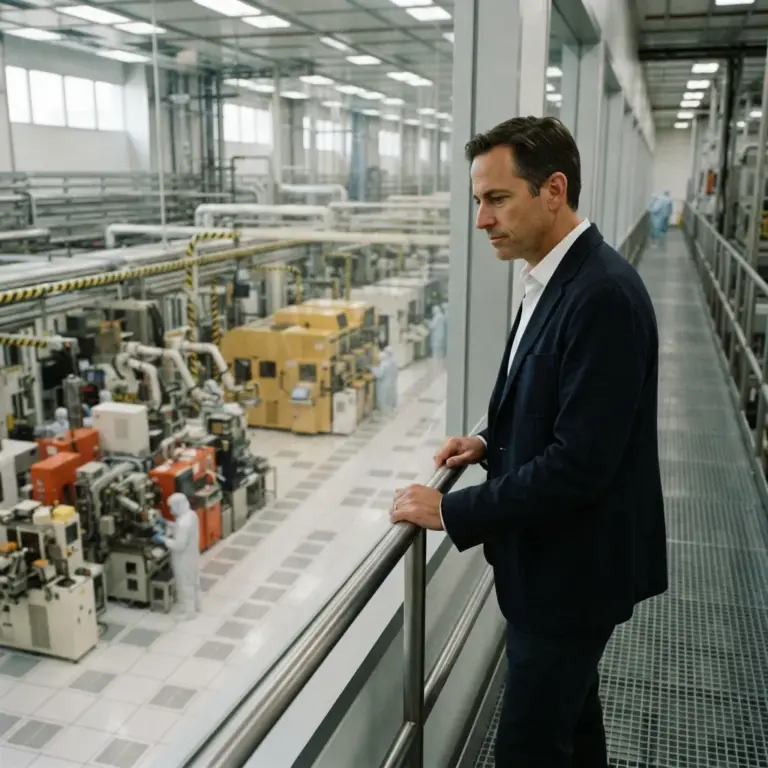
In the high stakes race to dethrone Nvidia, most industry players focus on who will design the fastest chip. However, Walter Goodwin, the CEO of chip startup Fractile, believes the smartest bet isn’t on the architects but on the builder. Speaking on the 20VC podcast, Goodwin expressed immense confidence in Taiwan Semiconductor Manufacturing Company, stating he would buy TSMC stock every day of the week because it currently looks cheap relative to its value.

Goodwin’s perspective stems from a practical reality facing almost every challenger in the artificial intelligence space. Whether it is a giant like AMD or a specialized project from OpenAI, these companies all rely on the same narrow pipeline of manufacturing capacity and high bandwidth memory provided by TSMC. For Goodwin and other startups, getting access to these fabrication plants is often a larger hurdle than the actual engineering of the chip itself. This creates a unique hedge for investors; regardless of which company eventually captures market share from Nvidia, they will likely still have to pay TSMC to actually produce their hardware.

Financial indicators seem to support this bullish outlook. Despite record breaking revenues and gross margins that far exceed management targets, TSMC has recently traded at a forward price to earnings ratio below its five year average. While some analysts worry about a potential cooldown in overall AI spending across the sector, others point out that analyst consensus for revenue continues to climb steeply through 2028.

Ultimately, while leadership changes at Nvidia or competitive breakthroughs by rivals may cause volatility among individual designers, TSMC remains the essential infrastructure for the entire industry. As long as there is a demand for advanced silicon wafers, the factory becomes more important than any single client. Until there is a systemic collapse in AI investment, TSMC occupies an enviable position as the sole provider of the tools everyone else needs to survive.

The tech world is buzzing with speculation following reports that Jensen Huang may be weighing a return to Nvidia. This comes just days after the company’s board forced his resignation as chief executive officer amidst a swirling scandal involving allegations of an improper relationship with a suspected Chinese agent. While Huang stepped down last Thursday after admitting to the affair, sources suggest he is now exploring paths back into the leadership fold of the firm he helped build into a global powerhouse.

Market analysts believe that any move toward reinstating Huang could trigger a significant rally across the semiconductor sector. Because of his singular influence on the industry, news of his potential comeback is expected to bolster not only Nvidia shares but also those of key competitors like Broadcom and Advanced Micro Devices. Investors have long viewed Huang as the primary catalyst behind the current artificial intelligence gold rush, making his status at the helm critical for broader AI investments.

Despite this hopeful development, the timing remains precarious for the chip giant. Wall Street has been volatile recently, with indices fluctuating wildly even as anticipation builds around upcoming earnings calls and high profile debuts like the Anthropic IPO. As Nvidia navigates this period of instability, shareholders are watching closely to see if the board will prioritize stability and corporate governance or embrace the visionary leader who steered them to unprecedented heights.