A former Alaska Republican lawmaker told Fox News Digital the FBI interviewed him after an apparent Democratic political operative allegedly posed as a conservative recruiter and tried to persuade him to enter the state’s U.S. Senate race amid an intensifying congressional investigation into the controversial “Decoy Dan Sullivan” ballot scheme.
The allegations raise questions about potential federal criminal liability. Article III Project attorney Will Chamberlain argued that a coordinated effort to deceive voters about a candidate’s identity could violate 18 U.S.C. § 241, the federal conspiracy-against-rights statute.
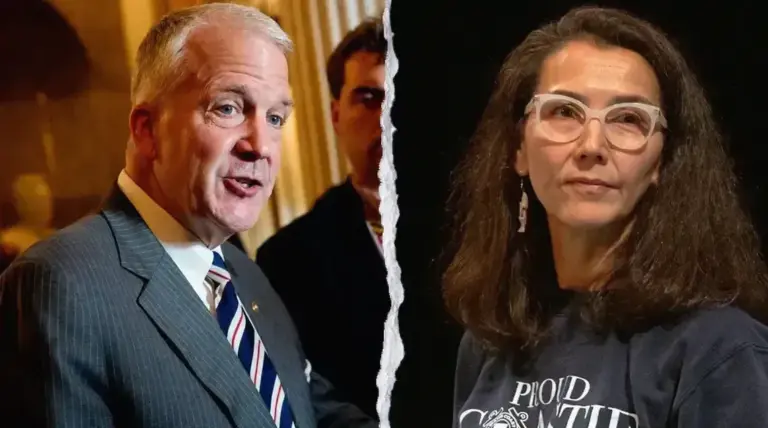
The revelations come after former campaign staff for Democratic Senate nominee Mary Peltola spoke to the New York Times about their knowledge of a reported scheme to stack Alaska’s four-person ballot with other “Dan Sullivans” to help siphon votes from incumbent GOP Sen. Dan Sullivan.
MARY PELTOLA’S CAMPAIGN, DEMS BACKED COVERT SCHEME TO FIELD SPOILER CANDIDATES IN ALASKA SENATE RACE: REPORT
The ballot ultimately included Peltola, incumbent Republican Sen. Dan S. Sullivan, Republican Gerald Heikes and retired Petersburg teacher Dan J. Sullivan. Whether the similarly named candidate diverted votes or affected the outcome remains unproven.
Chamberlain told Fox News Digital the alleged operation could constitute a federal felony if prosecutors establish that participants conspired to interfere with voters’ constitutional rights.
PELTOLA CAMPAIGN’S ALLEGED DAN SULLIVAN SPOILER PLOT TAKES NEW TURN AS DOJ FACES MAJOR LEGAL HURDLE
“The basic concept is you’re not allowed to conspire to injure or harm people’s constitutional rights. And one of those rights is to vote for the candidate of your choice,” Chamberlain said.
“These people conspired to put a fake ‘Decoy Dan’ Sullivan on the ballot in order to trick people who were going into the ballot box intending to vote for the incumbent Senator Dan Sullivan,” he alleged. “There’s a lot of good precedent on this that suggests that’s a crime and a felony punishable by up to 10 years in prison.”
Chamberlain cited historical cases involving ballot manipulation, while acknowledging that the precise circumstances of recruiting a same-name candidate have not previously been addressed in an identical case.
“Nothing exactly like this has happened before in the sense of recruiting a same-name candidate to trick people in the ballot box,” he said, adding that a lot of slanted electoral messaging is not illegal.
ALASKA’S GOVERNOR ORDERS INVESTIGATION AFTER NYT REPORT ON ALLEGED DEM-LINKED SENATE ELECTION SCHEME
“If you want to pretend that another Republican is better than the current incumbent or pretend that the incumbent’s not running and then persuade someone to vote for that candidate, that’s not a ‘conspiracy against rights’ because the right to vote for the candidate of your choice has not been impinged upon,” he said.
“It’s the fact that when you’re conspiring to put two people with the exact same name on the ballot to trick people who are going in there intending to vote for the incumbent and get them to vote for somebody else by deception.”
Meanwhile, former state Rep. David Eastman, a Republican from the Matanuska-Susitna Valley, told Fox News Digital by phone from Wasilla that he was approached by an operative under what he later surmised were false pretenses to recruit him into the race. Eastman said he also received several “fake mailers” suggesting “Decoy Dan” Sullivan was the real or only Sullivan in the race.
The mailers, shared with Fox News Digital, are framed in a “meet the candidates” format and do omit Senator Sullivan.
Eastman told Fox News Digital he was approached in the Mat-Su by an operative he later identified in a blog post as Jerid Kurtz, who was named in the New York Times report. Eastman said the operative claimed to represent conservative donors and encouraged him to run for Senate.
“He approached me through a constituent. I sat down with him in April here in Wasilla,” Eastman said.
“He pretended to represent conservative donors and was looking for conservative candidates to run for federal office; none of which was true,” Eastman added.
Eastman alleged Kurtz “pretended” to represent conservative donors and used a false name, but said the operative never mentioned either Sullivan or disclosed an intention to confuse voters during their meeting.
Fox News Digital reached out to the DSCC, Peltola’s campaign and Wingspan Strategies — where Kurtz is named in congressional documents as a co-owner — for comment. Dan J. Sullivan reportedly “vanished” as investigators began knocking on doors in his remote community, according to the Wall Street Journal.
The allegations come as federal investigators examine whether Democratic political operatives improperly recruited Dan J. Sullivan in an effort to confuse voters who intended to support Senator Sullivan.
The controversy has also reached Capitol Hill. In an October 29 letter, House Oversight and Government Reform Committee Chairman James Comer, R-Ky., requested that Kurtz appear for an in-person transcribed interview on November 6 concerning allegations that operatives associated with Mary Peltola’s campaign sought to recruit similarly named candidates to confuse voters.
“As a Democrat operative who was allegedly tasked with assisting in this effort, you have information that will assist the Committee’s investigation,” Comer wrote.
“If you do not voluntarily appear for the interview, we will be forced to evaluate the use of compulsory process,” he warned.
SIGN UP TO GET THE POLITICS NEWSLETTER
FIRST ON FOX: House GOP leadership is giving Republican lawmakers a new playbook to go up against an expected barrage of Democrat-led investigations in the new Congress.
Majority Leader Steve Scalise, R-La., wrote a letter to the current chairs of House committees on Thursday warning them to “maximize our remaining days in power to prepare for what is coming” with instructions on how to brace for those expected probes. A source sent a copy of that letter to Fox News Digital.
“House Democrats have signaled they intend to impeach President Trump, but they will not stop there. They will weaponize every single gavel to appease their radical base,” Scalise said. “They will use their oversight authorities to harass the President, his family, cabinet officials, and they will seek to destroy our allies. You all will be a key line of defense in this fight.”
The guidance includes three key points: “taking inventory” of current and likely future investigative efforts by Democrats while they are in the minority, identifying who is on Democrats’ target list, and reviewing how recent Supreme Court rulings as well as a Department of Justice (DOJ) memo on executive privilege could factor into future investigations.
‘LAWYER UP’: DEMOCRATS, REPUBLICANS WASTE NO TIME IN SETTING SOCIAL MEDIA ABLAZE AFTER MIDTERM SWEEP
Democrats’ targets could include “administration officials, programs and authorities, and external allies, including conservative partners and industry leaders,” Scalise said.
He added that his staff would meet with the relevant committees and others to further prepare.
“Please let me know if there are any additional tools or support you need from me as you undertake this important effort,” Scalise wrote. “I have full confidence that we will be effective in our efforts to fight back as a team.”
DEMOCRAT SEIZE HOUSE CONTROL IN STUNNING BLUE TSUNAMI, VOW RETRIBUTION AGAINST TRUMP ADMIN
Democrats have signaled they are poised for a wide range of investigations targeting Trump’s Cabinet, family, businesses, and allies as soon as they take over Congress next year.
Rep. Robert Garcia, D-Calif., the likely next head of the House Oversight Committee, released a brief statement Tuesday night when it was projected Democrats would win the House: “Lawyer up.”
DEMOCRAT IMMEDIATELY THREATENS SUBPOENAS FOR TECH EXECUTIVES IN WAKE OF MIDTERMS
The committee said in the statement, “Following this win, Garcia will become Chairman of the House Oversight Committee, where he has vowed to take on the Trump Crime Family, corporate corruption, DHS and ICE abuses, and the cover-up of the Epstein files. His statement can be found below.”
House Homeland Security Committee Democrats have similarly signaled they are preparing to probe Department of Homeland Security (DHS) Secretary Markwayne Mullin.
MIKE JOHNSON NOT RUNNING TO LEAD HOUSE GOP AFTER HISTORIC MIDTERM LOSSES
Meanwhile, a spokeswoman for House Judiciary Committee Democrats told Fox News Digital in response to Scalise’s letter, “Sounds like Rep. Scalise is asking his fellow Republicans to compile a list of all the corruption, lawlessness, and abuse they’ve been protecting from congressional oversight. But the people have spoken, and the cover-up expires with the Republican majority. The days of invertebrate congressional submission are over.”
The letter comes a day after Scalise launched a bid to become House minority leader in the new Congress.
He will be up against House Judiciary Committee Chairman Jim Jordan, R-Ohio, for the job.
Fox News Digital reached out to Democrats on the House Oversight Committee for comment.
Senate Democrats will soon decide who will lead them with their newly acquired grip on power in the upper chamber, and while Senate Minority Leader Chuck Schumer, D-N.Y., appears to be the favorite, some in the caucus aren’t eager to back him.
Schumer has led Senate Democrats for nearly a decade, helming the caucus as both majority and minority leader since 2017. But many of the fresh crop of Democratic senators-elect, which spans the ideological gamut from moderate to progressive, are tepid, at best, in backing him for another term.
And some said throughout their campaigns that they wouldn’t support him at all.
DEM SENATE HOPEFUL REJECTS SCHUMER BUT BENEFITS FROM MILLIONS IN SPENDING BY HIS ALLIES
“I mean no disrespect for Chuck Schumer, but we need new leadership,” Sen.-elect Adam Hamilton told CNN in September. “We need new younger leadership, young blood.”
Hamilton is the moderate megachurch pastor who toppled Sen. Roger Marshall, R-Kan., on Election Night, flipping the Sunflower State for the first time in nearly a century. He, like others this cycle, argued that Democrats needed “fresh ideas and fresh leadership.”
“In Kansas, Chuck Schumer is a liability for Democrats, and we’ve got to have leaders that can unite us, bring us together, not just Democrats, but bring together Democrats and Republicans to solve real problems,” he said. “And I think people are frustrated with the gridlock in the sense that people are not working together to solve problems.”
Democrats are expected to hold their leadership elections later this year, and Schumer will have to shore up support within his newly expanded caucus to stay at the top. But he will only need a majority of Senate Democrats to back him.
REPORTER’S NOTEBOOK: CONGRESS BRACES FOR POST-ELECTION GAME OF MUSICAL CHAIRS AS LEADERSHIP BATTLES LOOM
So far, Democrats’ majority in the upper chamber is at 54 seats and could further expand depending on the results in Mississippi and Alaska, which as of Thursday were leaning in their favor.
Schumer believed that he would still be the one to lead Democrats and contended to reporters on Wednesday that issues that incoming senators and their voters may have had with the direction of the Democratic Party in recent years were not about him.
“The issue is not me,” Schumer said. “I’ll be re-elected as majority leader, but the issue is focusing on the American people and what they want.”
Still, there is a faction of newcomers, including senators-elect Troy Jackson in Maine, Julianna Stratton in Illinois, Abdul El-Sayed in Michigan and Peggy Flanagan in Minnesota, who aren’t all in for Schumer.
THUNE GOES ALL-IN ON CAMPAIGN TRAIL AS SCHUMER STAYS ON BENCH, FACES REJECTION FROM FELLOW DEMS
Jackson, speaking to reporters just before Election Day, said his position hadn’t changed on Schumer.
“I told Schumer that I’m going to, you know, support somebody else,” Jackson said. “So it’s no different now.”
That somebody else could be Sen. Chris Van Hollen, D-Md., who has been proposed as an alternative by progressives, like El-Sayed, to lead Senate Democrats instead of Schumer. Van Hollen may have his eyes elsewhere — he has said that he’s “kicking the tires” on a 2028 run.
A Democratic aide familiar with Van Hollen’s thinking told Fox News Digital that before selecting a new leader, the lawmaker believed “the caucus needs to have an honest and open conversation about how we move an agenda forward that reflects the will of the American people.”
“He’s made it clear that the new Democratic majorities need to use their power to push a proactive, economic agenda,” they said.
This post appeared first on https://www.foxnews.com
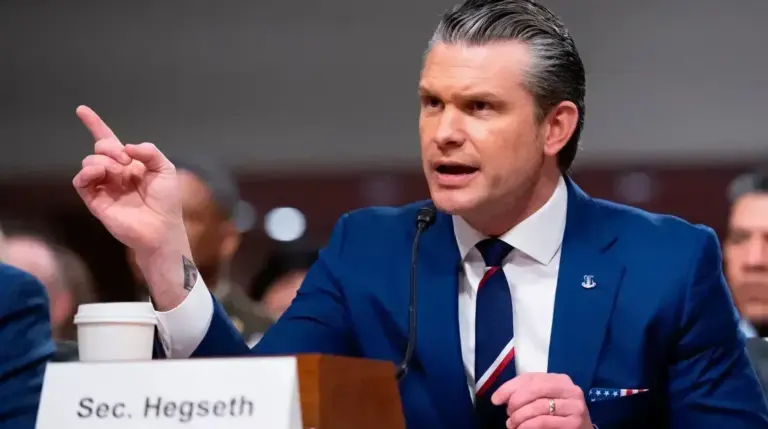
War Secretary Pete Hegseth urged Congress Thursday to approve at least $350 billion in defense funding while pushing back against efforts to impeach him.
In a video posted to X, Hegseth defended his Pentagon overhaul, including eliminating DEI initiatives, removing military leaders and rebuilding recruitment.
Hegseth dismissed the impeachment push as political theater while defending his efforts to overhaul the Pentagon and advance President Donald Trump’s military agenda.
HEGSETH FACES BIPARTISAN IMPEACHMENT THREAT AFTER IRAN WAR GETS BLAME FOR GOP MIDTERM SLAUGHTER
“We need every vote from every patriotic member of Congress,” Hegseth said, calling for a reconciliation bill of at least $350 billion to strengthen the military and defense industrial base.
The impeachment effort is being led by Rep. Thomas Massie, R-Ky., who introduced eight articles against Hegseth in September, accusing him of violating congressional war powers during the Iran conflict and abusing his authority in other military operations.
Massie, who lost his Republican primary in May, plans to renew the effort when Congress returns next week. The House has not voted on the articles.
Trump defended Hegseth on Thursday, telling ABC News he intends to keep him in his Cabinet despite the impeachment push.
GOP REP THOMAS MASSIE INTRODUCES 8 ARTICLES OF IMPEACHMENT AGAINST WAR SECRETARY PETE HEGSETH
Hegseth dismissed the effort as politically motivated.
“A disgruntled, defeated congressman along with all his Democrat allies, has also dropped sham articles of impeachment against yours truly,” Hegseth said.
He also took aim at former President Joe Biden and former Defense Secretary Lloyd Austin, accusing them of leaving the Pentagon in disarray and forcing the Trump administration to rebuild the military.
“We ended the weird and the woke and elevated patriots in strength,” Hegseth said, defending his efforts to eliminate diversity initiatives and change military personnel policies.
HEGSETH’S LEADERSHIP QUESTIONED BY GOP MILITARY VETERAN AS DEMOCRATS TALK IMPEACHMENT
Hegseth also defended the administration’s military operations against Iran, describing the campaign as a historic effort to prevent Tehran from acquiring nuclear weapons.
The war secretary closed with a message to troops amid the political fight in Washington.
“Don’t blink. Ignore the noise. Never hesitate,” Hegseth said.
“We will not back down. We put America and the warfighter first, always and without apology.”
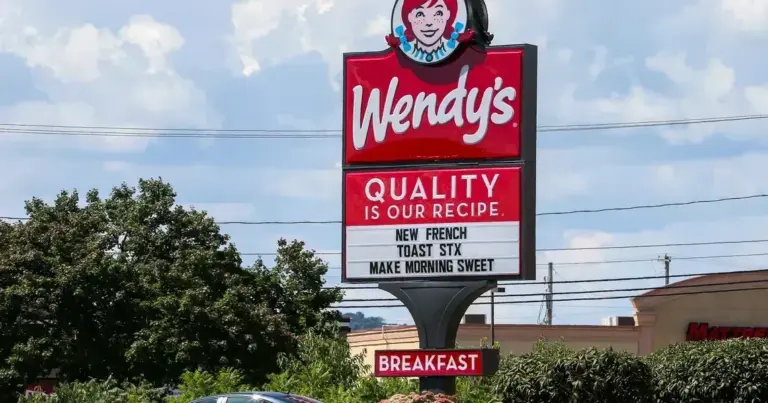
The board of directors at Wendy’s has firmly shut the door on a 1.4 billion dollar attempt to take over the company, rejecting a hostile bid from a consortium of investment firms. Led by activist investor Nelson Peltz and his firm Trian Partners, alongside partners like Flynn Group LP and Sixth Street Partners, the group offered 7.35 dollars per share. However, the company’s leadership viewed the number as far too low, noting that shares were trading higher than the offer even before markets opened on Thursday.
Art Winkleblack, the chairman of the board, stated that an independent committee reviewed the proposal and found it substantially undervalued what Wendy’s could achieve on its own. In defending the current trajectory of the business, Winkleblack expressed full confidence in CEO Bob Wright and insisted that accepting the deal would not be in the best interests of those who hold shares in the company. This standoff comes as Wendy’s attempts to navigate a difficult economic climate characterized by rising beef costs and stubborn inflation.
The timing of the takeover attempt follows a rocky stretch for the fast food chain, which has seen its stock price slide nearly 14 percent over the past year. Recent financial reports highlight a dip in domestic same-restaurant sales and a slight decline in overall revenue. These struggles mirror broader trends across the industry where consumers are tightening their belts, forcing competitors like McDonald’s to pivot toward more budget friendly menu options to keep foot traffic steady.
Internally, CEO Bob Wright has been candid about why things have slipped, admitting that previous pushes for efficiency may have come at the expense of quality. He acknowledged that some of the high standards regarding fresh ingredients and preparation that once set Wendy’s apart had drifted over time due to cost cutting measures. By rejecting the buyout, Wendy’s is betting that it can fix these operational hiccups and recapture its distinct market position without handing over control to outside investors.
Wendy’s is drawing a hard line in the sand against activist investor Nelson Peltz, flatly rejecting a 1.4 billion dollar buyout bid that the company claims significantly undervalues its worth. To ensure they keep control of their own destiny, the burger chain has implemented a poison pill defense. This strategic move allows existing shareholders to buy discounted stock if any single entity acquires more than 15 percent of the company, effectively making a hostile takeover prohibitively expensive for bidders like Peltz and his Trian Fund Management.
The clash comes at a volatile time for the brand, which has been battling soaring beef costs and a fleet of aging storefronts. While Peltz argued that rising inflation and fierce competition make his offer the safest bet for shareholders, Wendy’s leadership isn’t buying it. CEO Bob Wright, who took the helm in May, told investors during a recent conference call that he is fully confident in a turnaround strategy already showing positive momentum. That confidence seems to be resonating with Wall Street, as shares ticked upward following third quarter results that beat expectations.
Behind the scenes, the company is undergoing a painful but necessary pruning process to regain its edge. Wendy’s has been aggressively shutting down outdated restaurants across the United States to prioritize higher profit margins, including hundreds of closures slated through 2026. The road hasn’t been entirely smooth; recently, one of its largest franchisees filed for bankruptcy after a dispute over their agreement ended in termination attempts by corporate headquarters.
Despite these growing pains, Wendy’s remains determined to recapture the magic of its heyday when it first challenged giants like McDonald’s with square patties and legendary advertising campaigns. Though market research shows their slice of the American burger pie has shrunk slightly since 2019 due to the rise of premium rivals like Five Guys and In-N-Out, Wright believes the current roadmap will eventually restore the chain to its full potential without needing outside intervention from activist investors.
Cerca Trova Restaurant Group, one of the largest operators of Outback Steakhouse franchises, has officially filed for Chapter 11 bankruptcy protection in Delaware. The San Diego-based company is currently grappling with a massive debt load of roughly 449 million dollars, leaving it unable to sustain its portfolio of 61 restaurants across several Western states. While the group operates in Arizona, Colorado, Nevada, and New Mexico, the bulk of its footprint is in California, where executives claim the local regulatory environment played a pivotal role in their downfall.
In court documents, CEO David Goronkin pointed toward a perfect storm of converging financial pressures that became unsustainable by 2026. He specifically highlighted California’s aggressive minimum wage hikes as a primary driver of the crisis. Although Outback is not subject to the specific twenty dollar hourly mandate reserved for fast food workers, it is still bound by the state’s general minimum wage increase to nearly seventeen dollars an hour. When combined with dwindling guest traffic and rising overhead, these payroll expenses pushed the company over the edge.
The struggle wasn’t just about wages; inflation hit every corner of the menu. According to bankruptcy filings, beef prices have climbed by as much as five percent annually since 2022, making those signature steaks far more expensive to produce. This trend coincides with a wider slump in casual dining across America, mirrored by recent high profile bankruptcies like Red Lobster and True Food Kitchen. Once a powerhouse with nearly one hundred locations in 2018, Cerca Trova saw its numbers dwindle steadily until this final collapse.
As part of the restructuring process, Bloomin Brands—the parent company of Outback Steakhouse—has stepped in as the lead bidder to buy back assets for about 26.3 million dollars. To ensure stores stay open during the legal proceedings, Bloomin Brands has provided millions in bridge financing. Company spokespeople were quick to clarify that this failure is isolated to this specific franchisee and does not reflect a systemic weakness within their overall corporate operations or liquidity.