
Archive

November 8, 2026

Browsing

Anthropic is stepping into the public spotlight at perhaps the worst possible moment for the artificial intelligence industry. The company is currently preparing for a massive Nasdaq debut slated for mid-November, but it does so against a backdrop of intense political hostility. While early whispers suggested a valuation as high as two trillion dollars, current estimates have cooled to between one and 1.5 trillion dollars, reflecting a broader market downturn that has hammered chipmakers and cloud infrastructure providers alike.

The timing is particularly precarious following Tuesday’s midterm elections, where American voters delivered what can only be described as a stinging rebuke of the AI boom. In key states like Texas, Georgia, Ohio, and Michigan, candidates running on platforms of strict AI regulation won decisively. Most tellingly, local communities crushed data center initiatives in 40 out of 41 contested cases. According to an NBC News exit poll, more than half of voters cited these sprawling facilities as a primary driver in their choice of congressional candidates, viewing them less as hubs of innovation and more as monuments to corporate greed that threaten local utilities and environments.

For years, Anthropic has attempted to distance itself from the brash image of its rivals by positioning itself as the safety conscious alternative to OpenAI. By focusing primarily on business contracts rather than consumer apps, CEO Dario Amodei managed to keep his company out of the daily headlines. However, going public changes the math entirely. Transitioning to a listed company forces a level of transparency and visibility that makes anonymity impossible, effectively turning Anthropic into the public face of an industry that millions now view with suspicion.

This friction is physically manifested in the enormous cost of compute power required to run modern AI models. In updated filings, Anthropic revealed staggering purchase commitments totaling nearly nine hundred billion dollars for infrastructure and compute resources. This astronomical spending coincides with a period where average citizens are struggling with inflation and rising energy costs, making the construction of thirsty data centers feel like an affront to those living in their shadow.

While some analysts argue that being a public company provides an opportunity to build trust through accountability, others warn that Anthropic is walking straight into a storm. With seventy one percent of people surveyed recently stating they do not trust big tech to act in society’s best interest regarding data centers, the path from private startup to public giant may be fraught with more volatility than any stock chart can predict.


When the results rolled in on Election Night, few expected the map to shift as dramatically as it did, particularly in traditionally deep red territories like Texas. In Kaufman County, located just southeast of Dallas, the arrival of massive data center projects created a flashpoint of local resentment that Democrats expertly leveraged. A strategic effort by the Lone Star Rising PAC targeted voters living within five miles of these facilities, sending personalized warnings that linked the industrial expansion directly to Republican leadership. This hyper local approach helped James Talarico carry the county by a slim margin and contributed to a historic statewide victory for Democrats in Texas for the first time since 1994.

This trend was mirrored across other battlegrounds where once ignored zoning issues became central campaign pillars. In Michigan, Representative elect Will Lawrence successfully flipped a Republican House seat by framing tech billionaires as intruders threatening home values and hiking energy bills. Similarly, in South Carolina, candidate Annie Andrews secured a stunning upset by branding her opponent as Data Center Darline, managing to win over pockets of voters who had previously supported Donald Trump by wide margins. These wins suggest that while inflation and corruption remain top tier concerns for most citizens, the physical encroachment of artificial intelligence infrastructure has become a powerful proxy for broader economic anxiety.

Republicans now find themselves grappling with a fragmented identity on the issue, caught between their desire to maintain American technological dominance over China and a growing grassroots rebellion among their own base. Even former President Trump attempted to soften the blow late in the cycle by suggesting AI be rebranded as super intelligence to distance it from current controversies. Internal memos from conservative policy groups now warn that failing to recalibrate their strategy regarding land use and energy costs could leave them vulnerable heading into 2028.

The backlash extended beyond individual candidates to actual lawmaking at the municipal level. In Ohio, where Senator Sherrod Brown successfully painted his opponent as the face of data centers, voters in ten different cities passed charter amendments to ban large scale facility construction entirely. One community saw support for such bans reach eighty percent, signaling that opposition transcends partisan loyalty. As industry trade groups scramble to prove that these hubs provide tangible tax relief for residents, political strategists agree that the fight over where we house our data has evolved into a defining cultural and economic conflict for rural America.

For decades, the 4 percent rule has served as the gold standard for retirees trying to navigate the daunting question of how much they can safely spend without running out of money. The premise is elegantly simple: withdraw 4 percent of your total nest egg in the first year and adjust that amount for inflation annually thereafter. While this formula provided a sense of security for generations, modern economists and financial advisors are warning that relying solely on this math could be a dangerous gamble in today’s volatile economic climate.

One of the primary threats to this strategy is the hidden erosion caused by advisory and management fees. When investors pay a percentage to a wealth manager alongside internal mutual fund expenses, these combined costs can easily eat into two percent of their annual returns. This creates a significant gap between theoretical growth and actual available cash. Furthermore, critics argue that the rule relies too heavily on historical American market data from the mid twentieth century. With firms like Vanguard projecting lower future yields, there is little guarantee that tomorrow’s markets will mimic the exceptional booms of the past.

Beyond market fluctuations, personal longevity and health present unpredictable hurdles. The 4 percent rule was built around a thirty year retirement window, but many Americans are retiring earlier than planned while simultaneously living longer lives. If a person retires at 62 and reaches 100, they face nearly four decades of withdrawals rather than three. This timeline shift is further complicated by cognitive decline, which can impair an individual’s ability to manage complex portfolios or leave them vulnerable to predatory financial scams that can wipe out entire life savings in an instant.

Finally, the rigid nature of the rule fails to account for the erratic spending patterns inherent in aging. Most retirees experience a u shaped spending curve where they splurge on travel early on, settle into a quieter middle period, and then face massive spikes in costs due to long term care toward the end of their lives. Between expensive assisted living facilities and nursing homes, these late stage medical bills can dwarf any inflation adjustment programmed into a simple withdrawal formula, proving that flexibility is often more valuable than following a strict mathematical rule.

Medical researchers are grappling with a surprising setback after an experimental drug designed to prevent heart attacks and strokes failed to deliver promised results. The medication, known as pelacarsen, was specifically engineered to target lipoprotein(a), a cholesterol-carrying protein linked to cardiovascular risk in roughly twenty percent of the global population. For millions of people who maintain healthy diets and exercise routines yet still suffer from heart disease, this drug represented a potential lifeline.

Led by Dr. Steven Nissen of the Cleveland Clinic, the extensive five year study tracked over eight thousand adults who already suffered from heart disease. While the drug successfully slashed levels of the targeted protein by nearly eighty percent, that biological victory did not translate into actual health benefits. Patients taking the medicine fared no better than those given a placebo when it came to avoiding serious cardiovascular complications, leaving researchers stunned by the disconnect between lowering blood markers and improving survival rates.

The pharmaceutical giant Novartis, which sponsored the trial, acknowledged that the primary goals were not met but suggested that the data will still help refine how doctors manage heart disease in the future. This outcome has sparked a debate among cardiologists regarding whether high levels of lipoprotein(a) truly cause heart disease or simply serve as a warning sign for other underlying issues. Some experts suggest that treating patients earlier in life or focusing on those with even higher baseline risks might yield different results.

Despite the disappointment surrounding pelacarsen, specialists emphasize that this is not necessarily the end of the road for similar therapies. Other pharmaceutical companies continue to develop and test competing drugs targeting the same protein, with more results expected in coming years. While this specific chapter ended in failure, members of the medical community remain hopeful that they can eventually unlock a way to protect those genetically predisposed to heart disease regardless of their lifestyle choices.

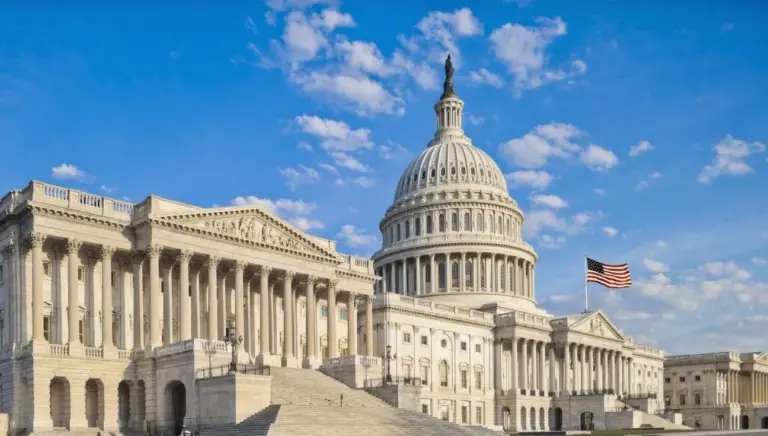
Wall Street experienced a whirlwind of emotions following the midterm elections, where voters handed Democrats control of both the House and the Senate. While the initial reaction was positive, sending the Dow to its largest daily gain of the year, the optimism evaporated quickly. By November 5, investor nerves frayed and the tech-heavy indices plummeted as fears mounted over potential regulatory crackdowns on artificial intelligence infrastructure. This sudden spike in volatility left many wondering if the usual political playbook still applies to a modern economy dominated by silicon and software.

Historically, however, there is plenty of reason for confidence. Over the last eighty years, the S&P 500 has risen in every single twelve month period following a midterm election since 1946. Interestingly, whether government is unified or divided seems to matter very little to the bottom line, with average gains hovering around fourteen percent regardless of who holds power. In fact, the specific scenario we face now—a Republican president paired with a Democratic Congress—has actually yielded an even higher historical average return of sixteen percent, largely because legislative gridlock often prevents drastic policy shocks that spook markets.

Despite these comforting statistics, current market dynamics introduce a wild card that didn’t exist in previous decades. Artificial intelligence firms now comprise more than thirty percent of the S&P 500, making the broader market hypersensitive to sector-specific regulations. There are growing concerns that Democrats may target the massive amounts of electricity and water consumed by data centers, potentially slowing expansion through aggressive committee hearings and stricter permitting processes. This explains why tech trusts have seen significant declines recently while more traditional industrial stocks have remained relatively stable.

Ultimately, analysts suggest that macro fundamentals like GDP growth and Federal Reserve interest rates will carry more weight than ballot boxes over the long term. Investors should keep a close eye on upcoming corporate earnings reports and congressional appointments to see if cloud giants maintain their spending levels or pull back in anticipation of new rules. If volatility subsides soon, this recent dip may be viewed simply as a brief repricing event rather than a fundamental shift in fortunes for American equities.